
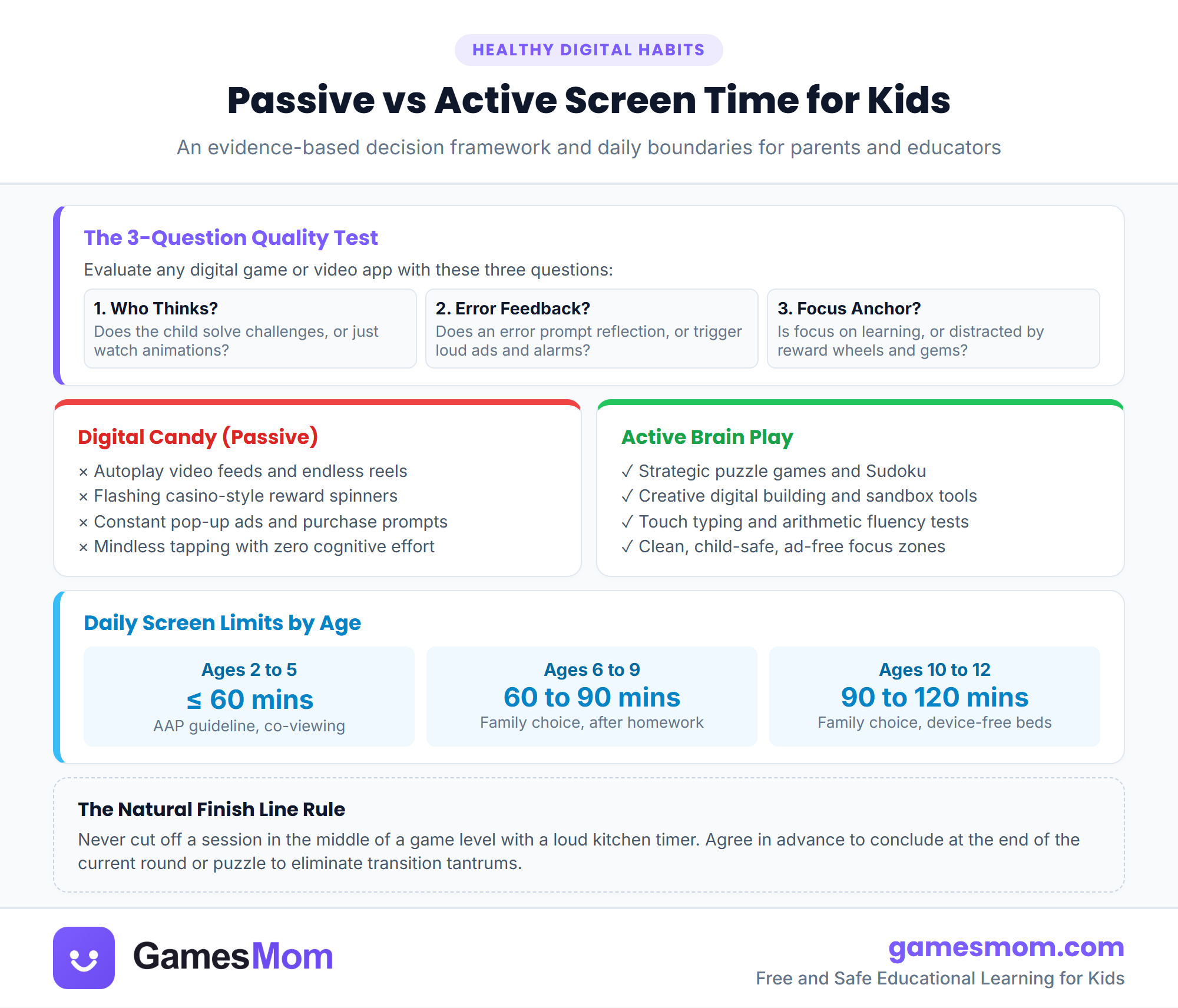
Passive vs Active Screen Time for Kids Guide
Learn the difference between passive video consumption and active brain play with research backed screen time guidelines for kids.
Research-backed educational posters and quick-reference visual guides on screen time, math fluency, early literacy and classroom resets. Built for parents, homeschoolers and classroom teachers, and ready to print on US Letter or A4.
Learn the difference between passive video consumption and active brain play with research backed screen time guidelines for kids.
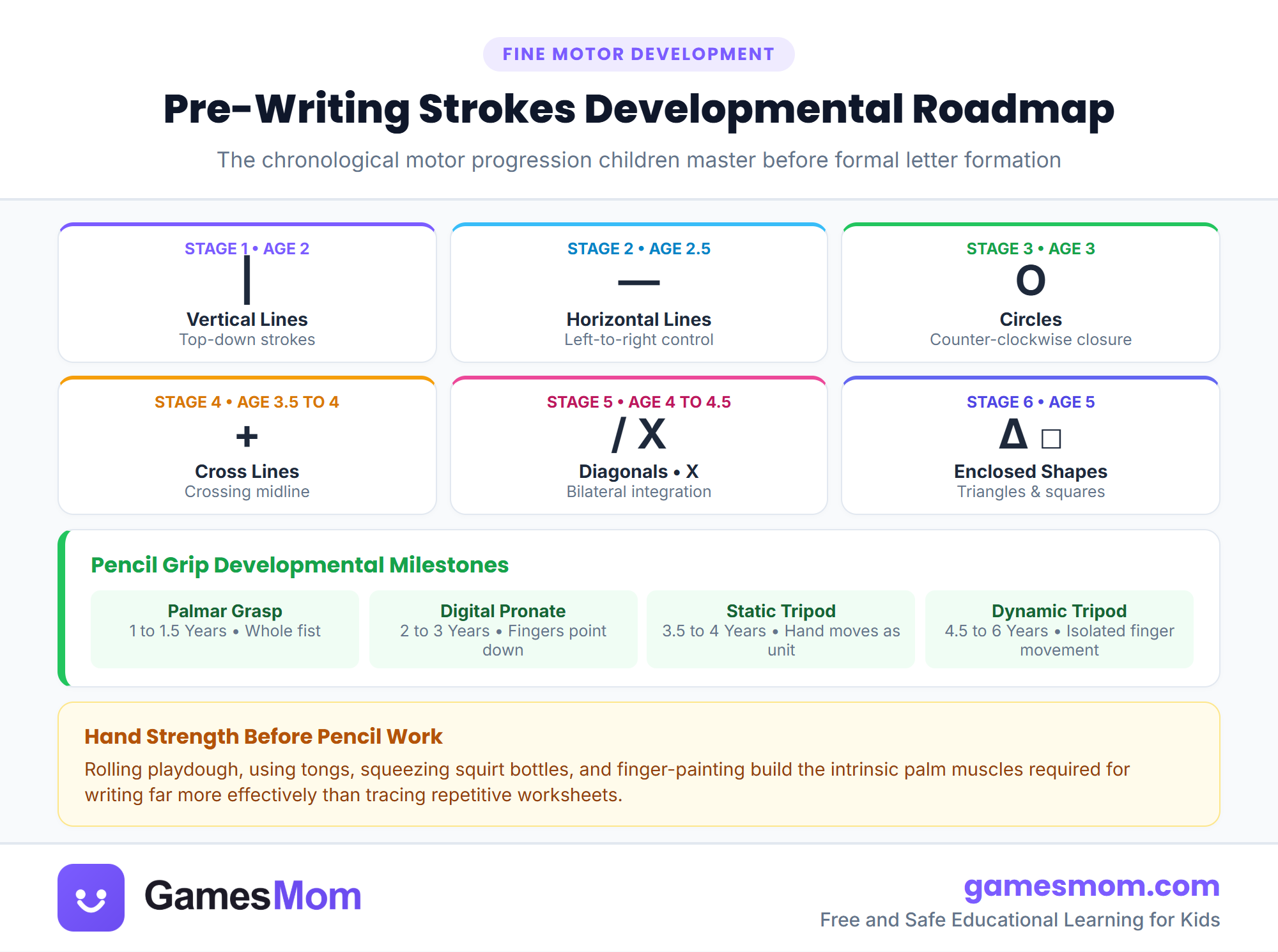
Learn the developmental progression of pre-writing lines and pencil grip stages before teaching formal handwriting to preschoolers.
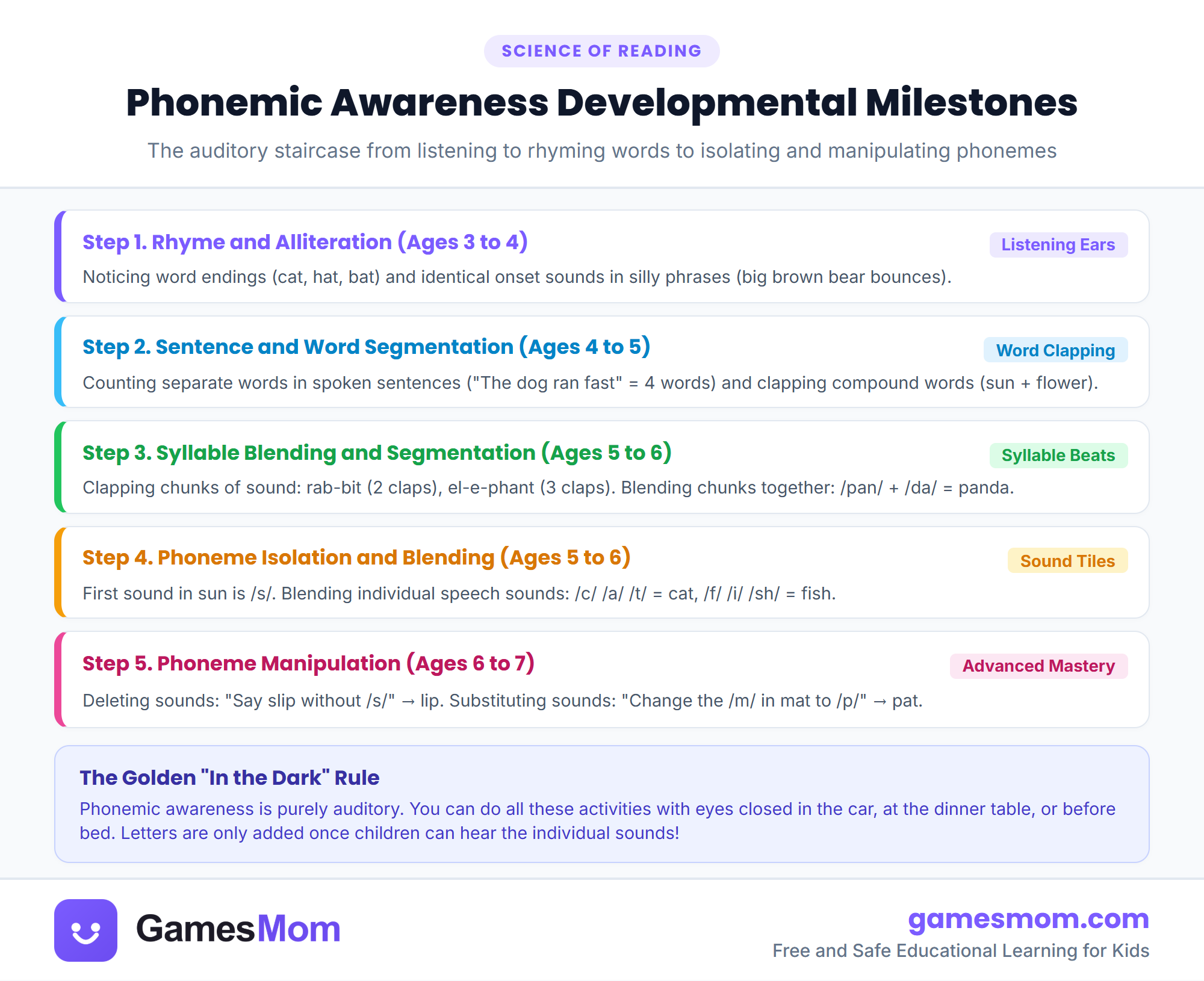
Track the four essential auditory stages of phonemic awareness from rhyming and syllable clapping to phoneme manipulation.
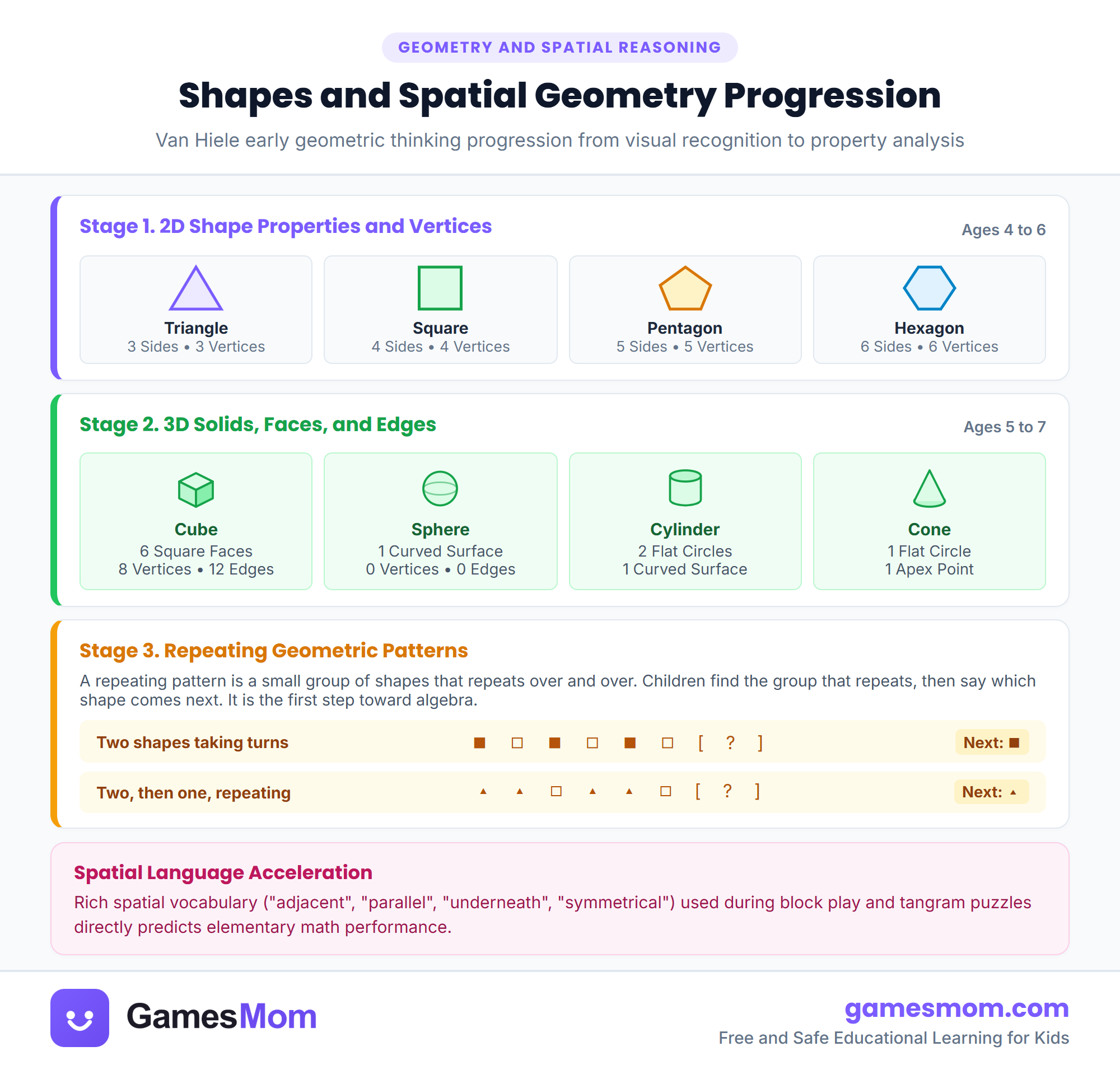
Explore the cognitive progression of early geometry from 2D shape identification to spatial rotation, tangrams, and 3D patterns.
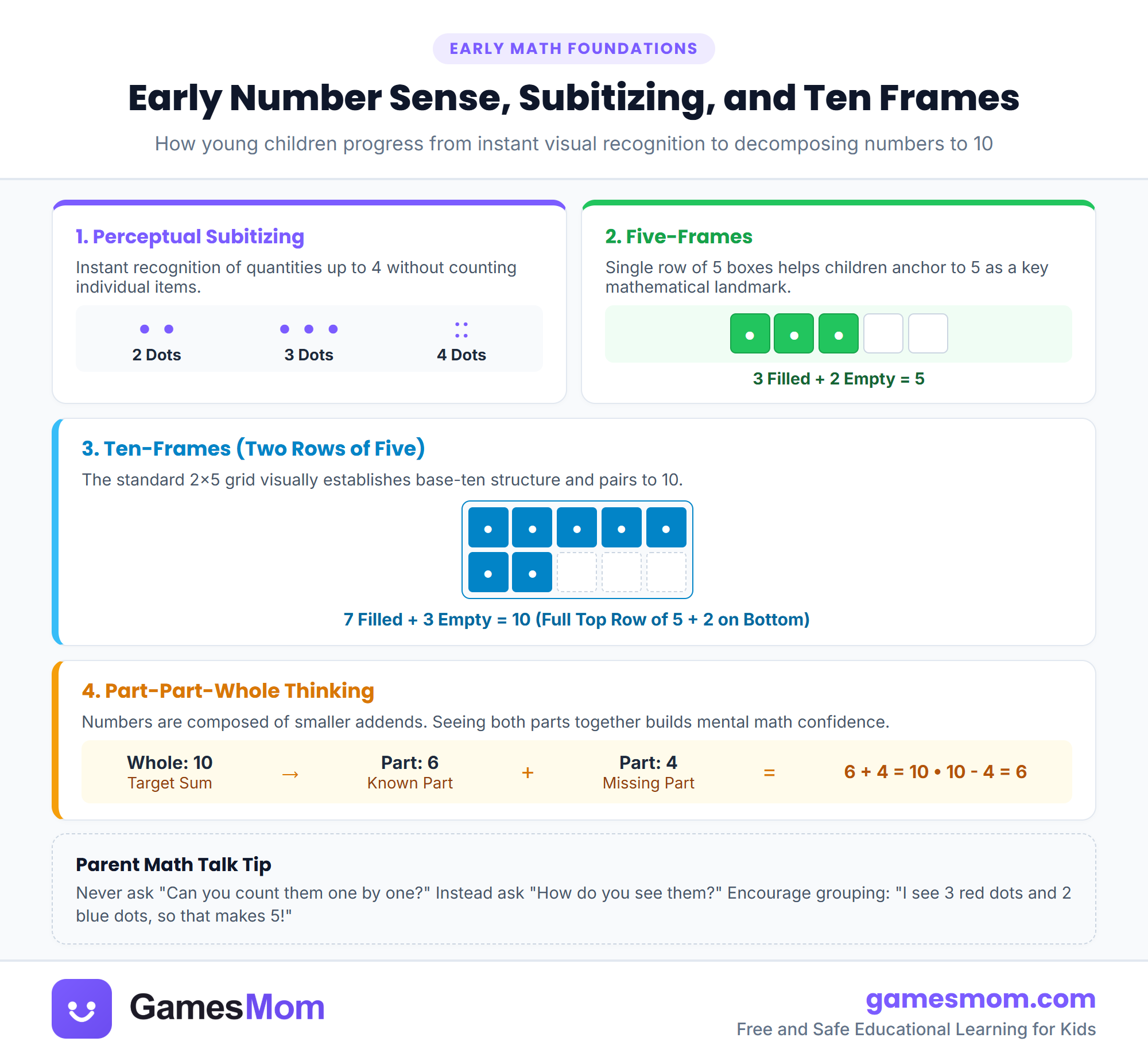
Learn how instant dot recognition, five-frames and ten-frames build early number sense before formal addition and subtraction begins. See the guide.
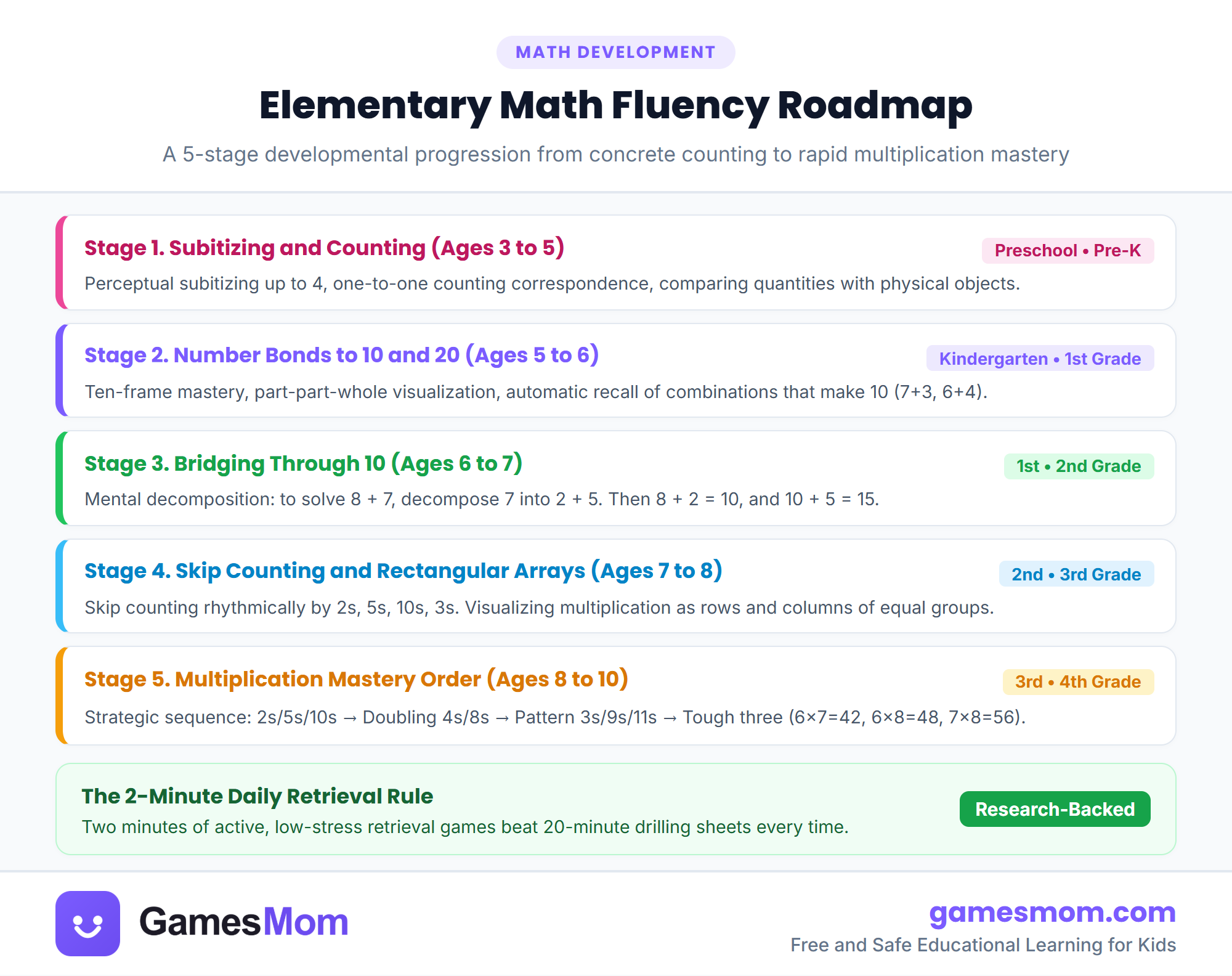
Discover the five developmental stages of elementary math fluency, from early subitizing and number bonds to multiplication mastery.
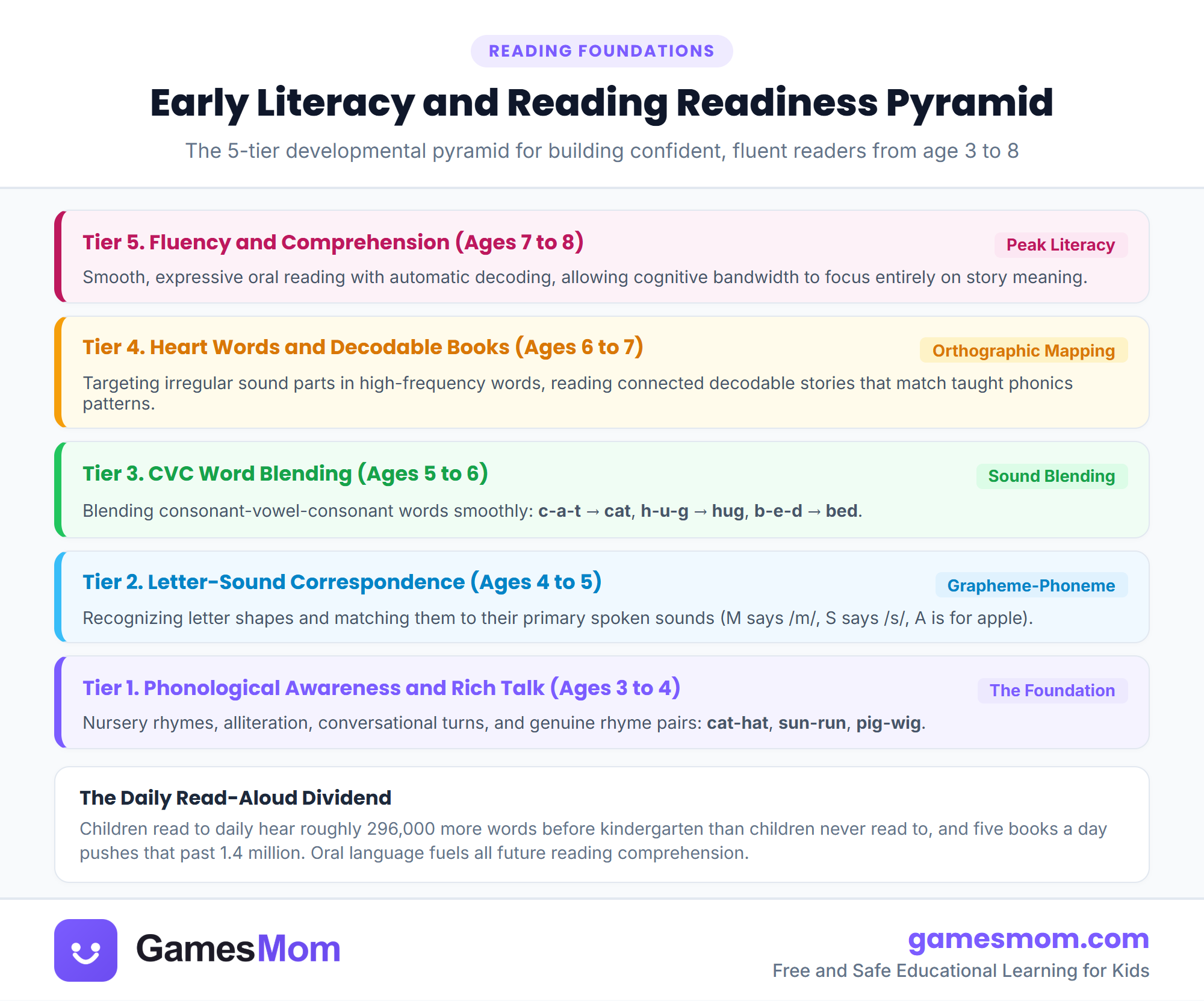
Explore the five tiers of reading readiness based on the Science of Reading, from phonological rhyme to CVC blending and sight words.
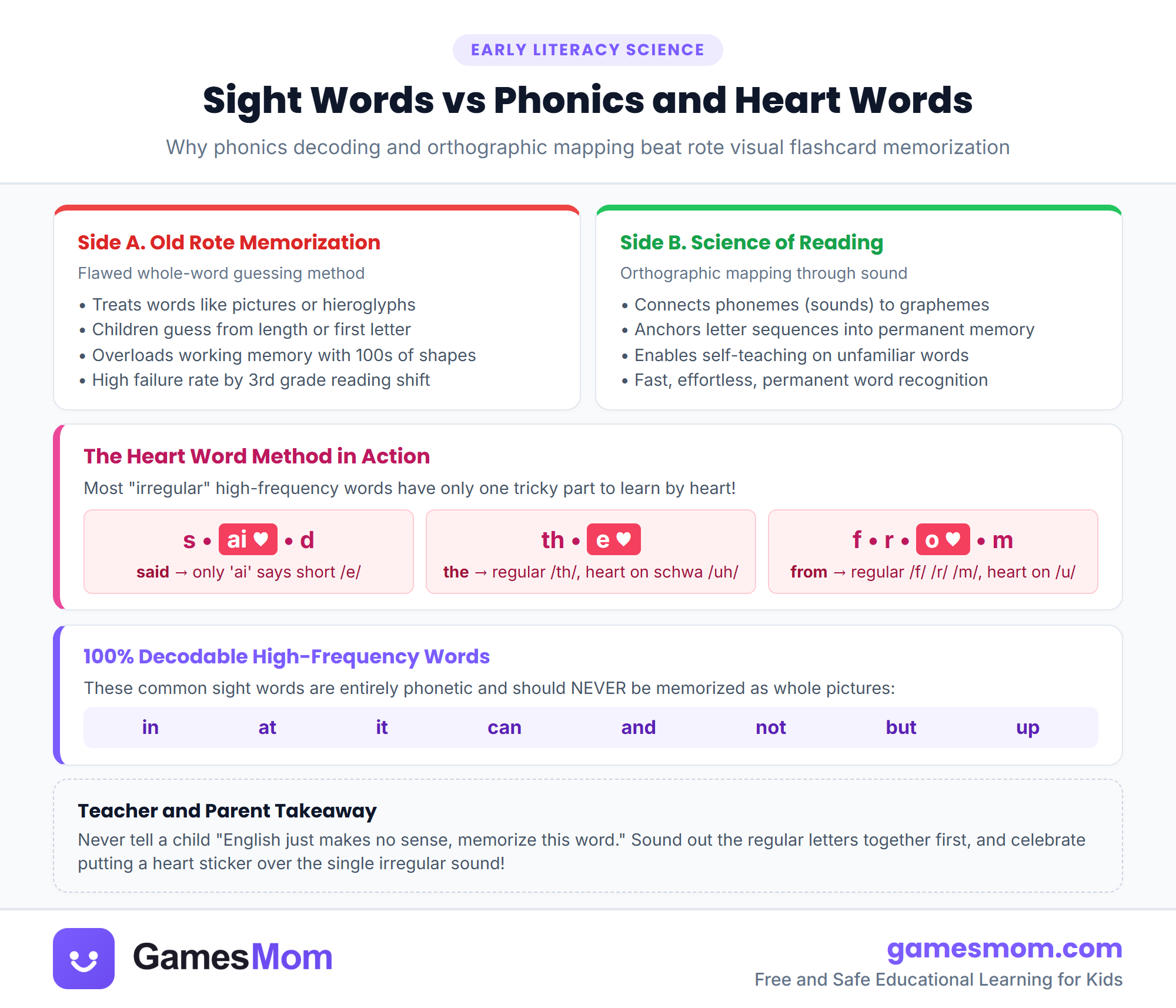
Learn why flashcard drilling fails and how orthographic mapping with heart words helps kids decode high frequency words with confidence.
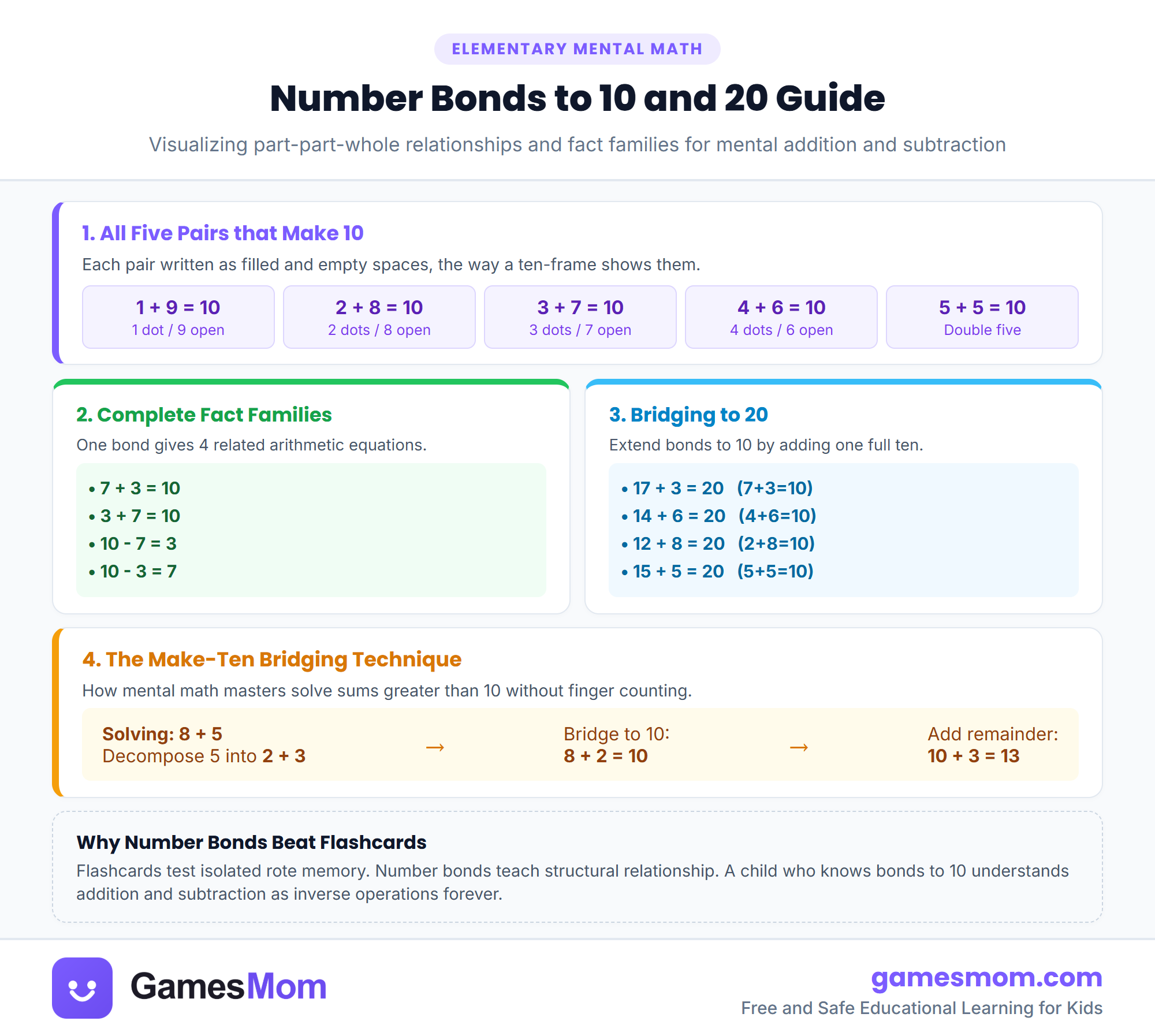
Master number bonds to 10 and 20 with visual ten-frames, part-part-whole models, and inverse fact families for mental math fluency.
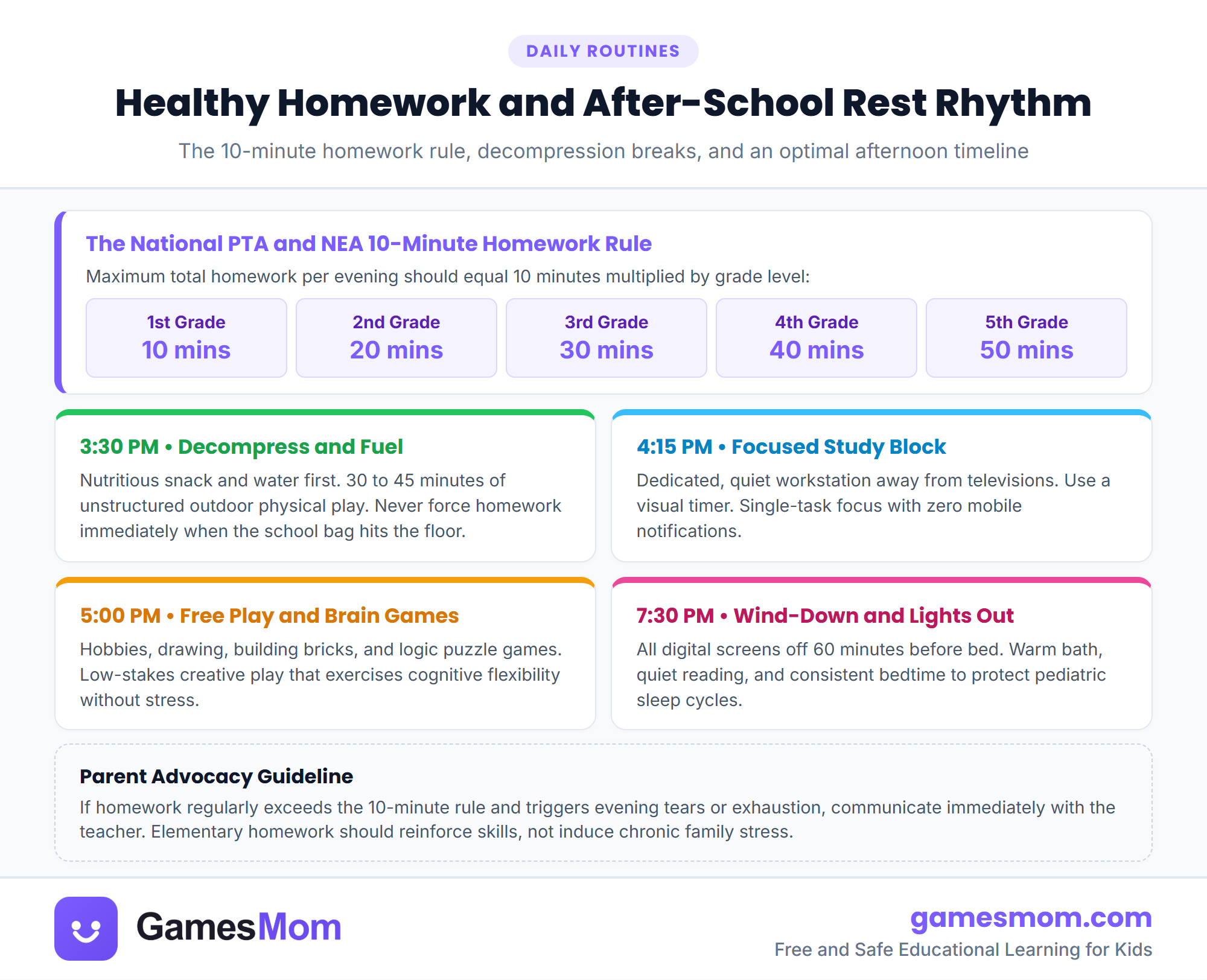
Learn the 10-minute homework rule, healthy afternoon timelines, and how to eliminate evening schoolwork battles for elementary kids.
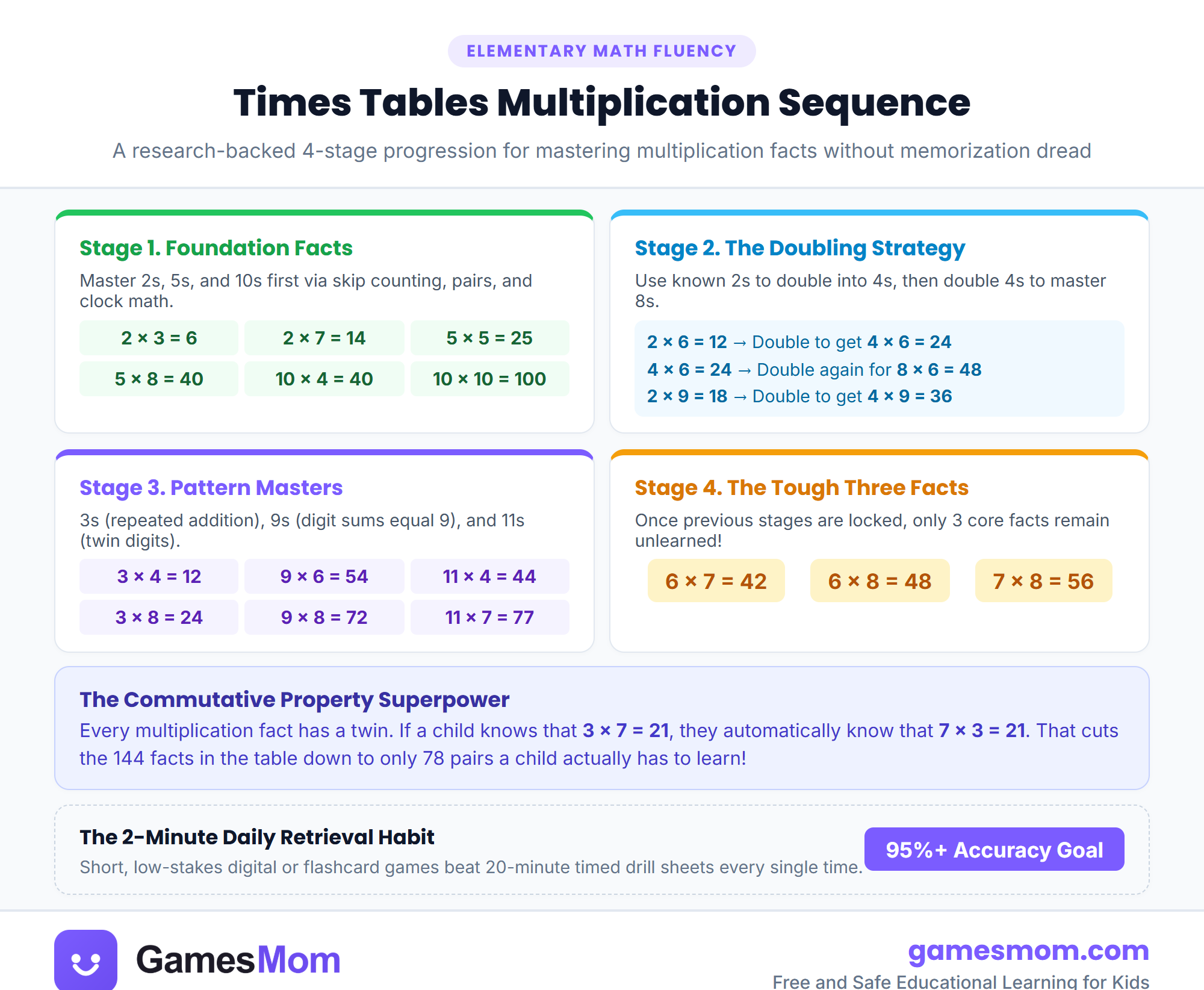
Learn the stress-free cognitive order for mastering multiplication tables from easy patterns and doubling tricks to tricky facts.
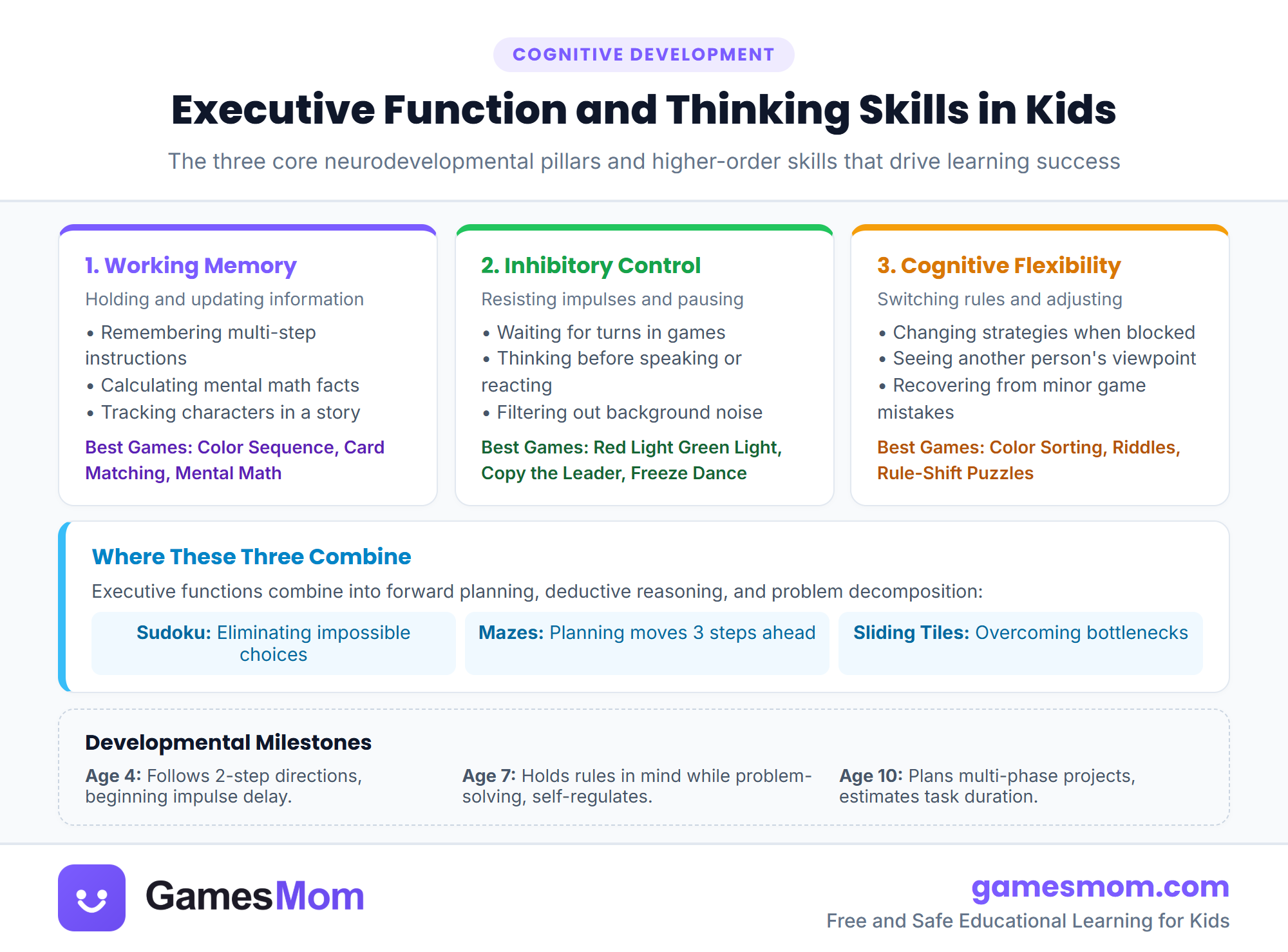
Learn how game-based problem solving strengthens working memory, impulse control, cognitive flexibility, and spatial reasoning in kids.
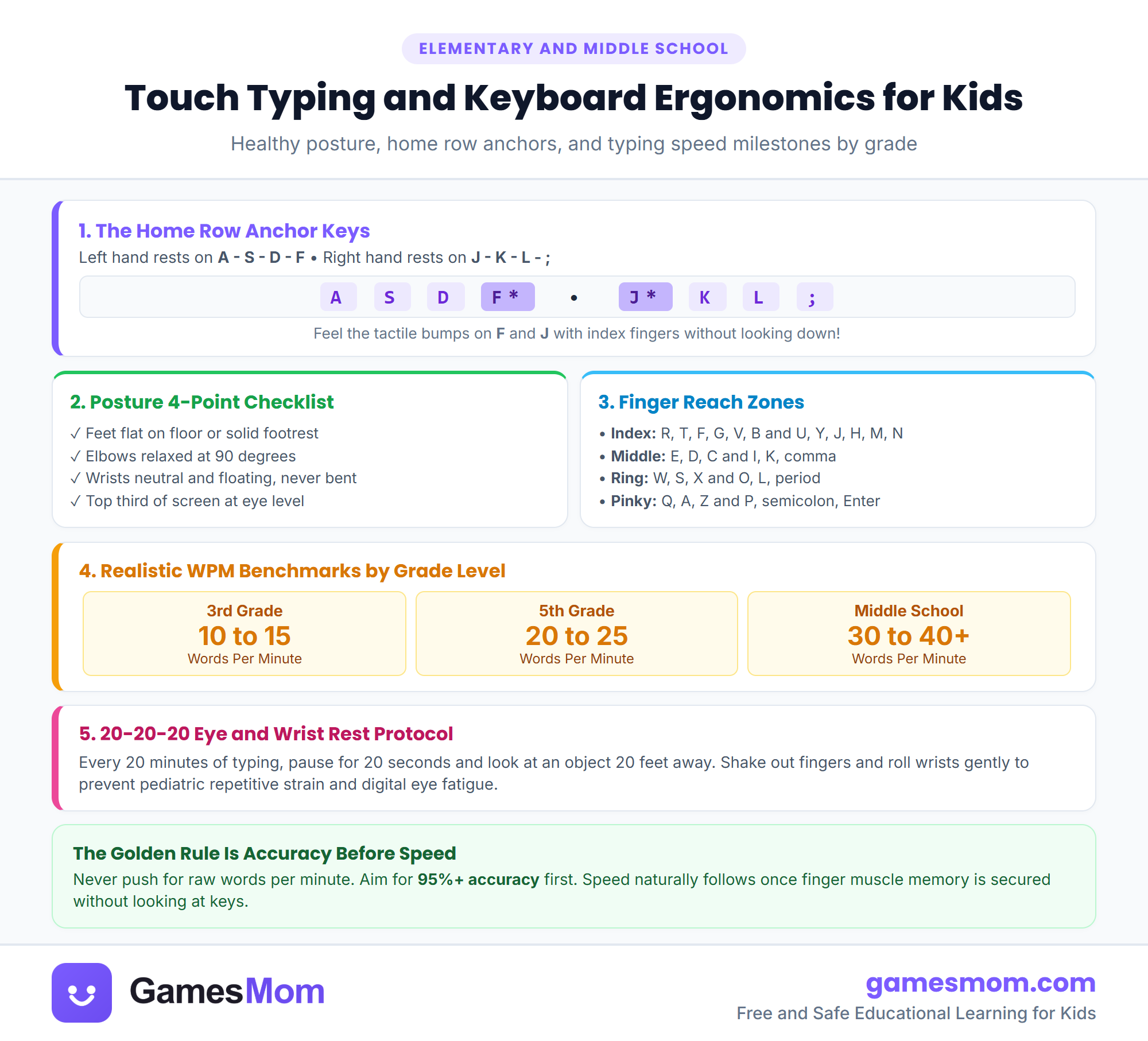
Learn healthy keyboard posture, home-row finger placement, and realistic typing speed benchmarks by grade for elementary students.
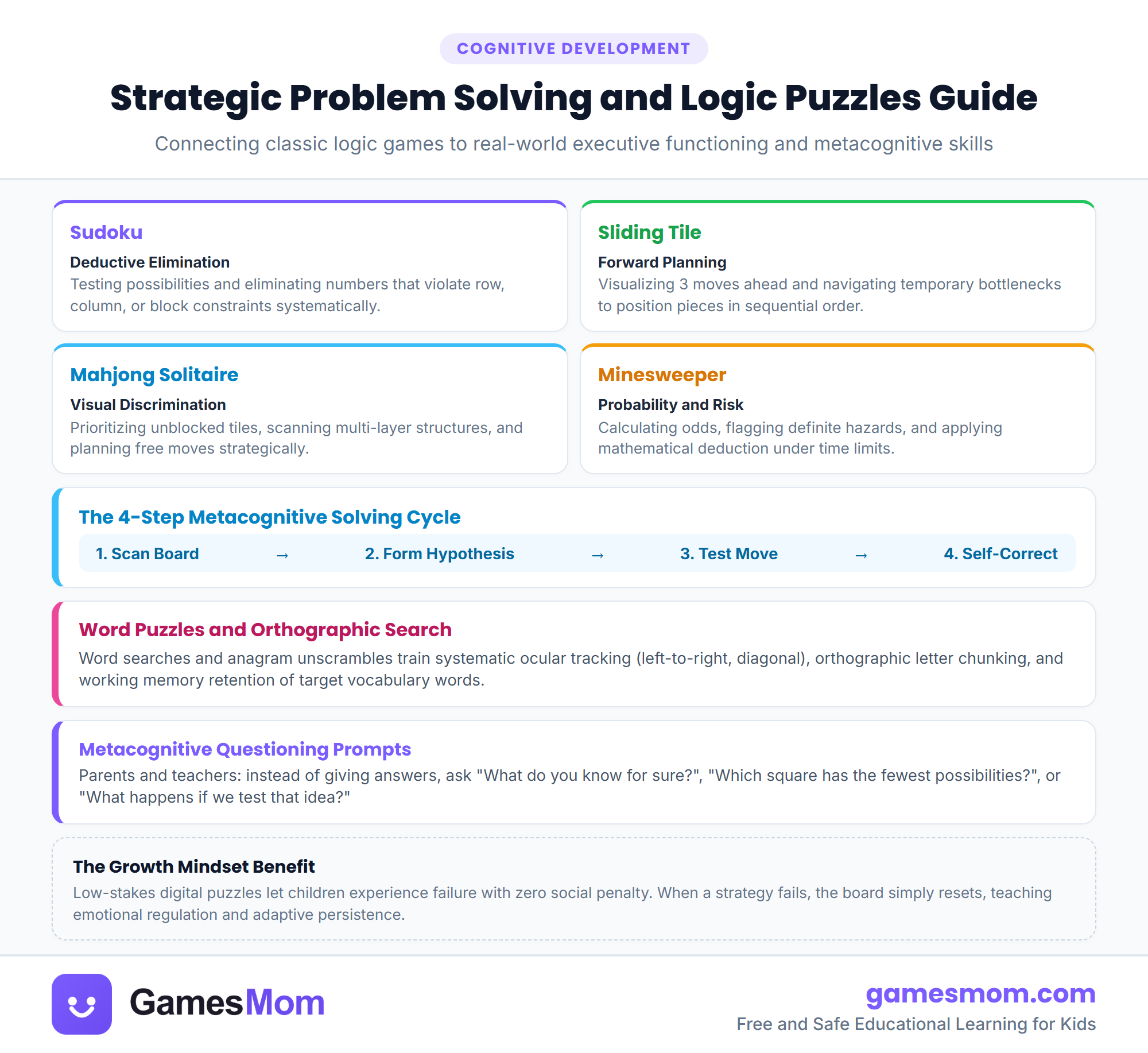
Learn how classic logic puzzles like Sudoku, Sliding Tiles, and Minesweeper train deductive reasoning and executive function in kids.
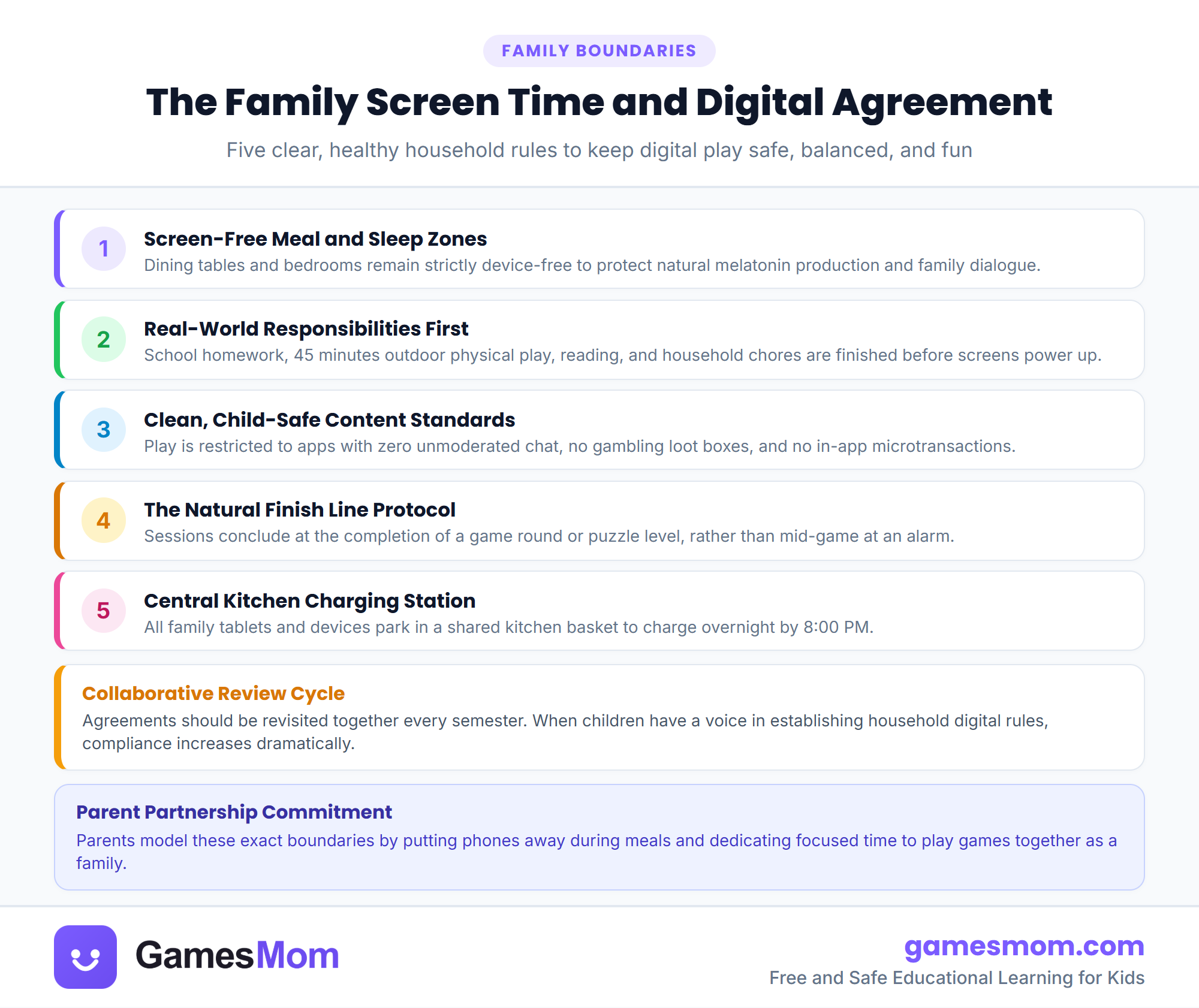
Establish clear, healthy digital boundaries with four household rules that prevent gaming battles and protect childhood sleep.
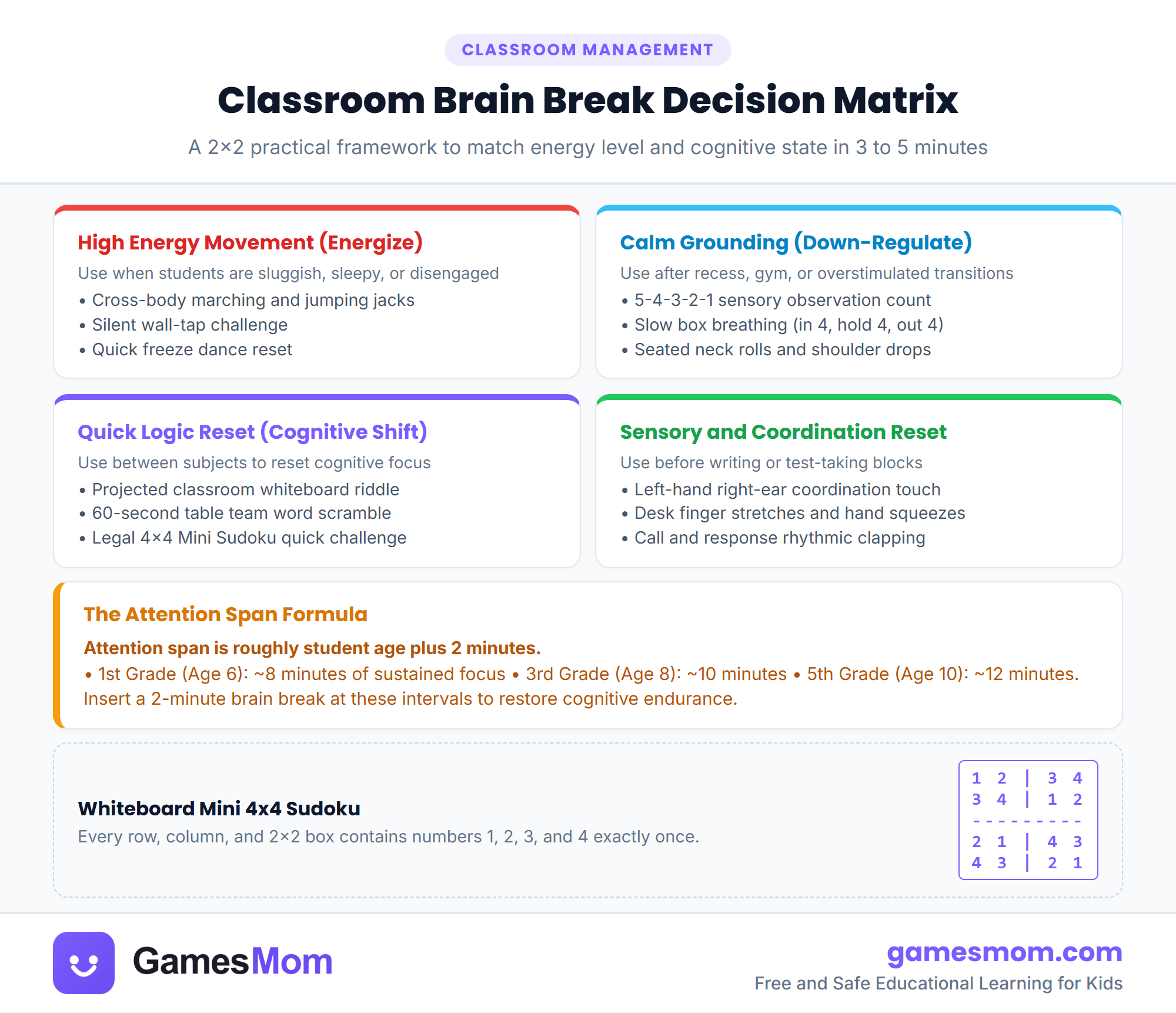
Reset student focus in five minutes with a research backed 4-quadrant brain break matrix designed for elementary classrooms and homeschoolers.
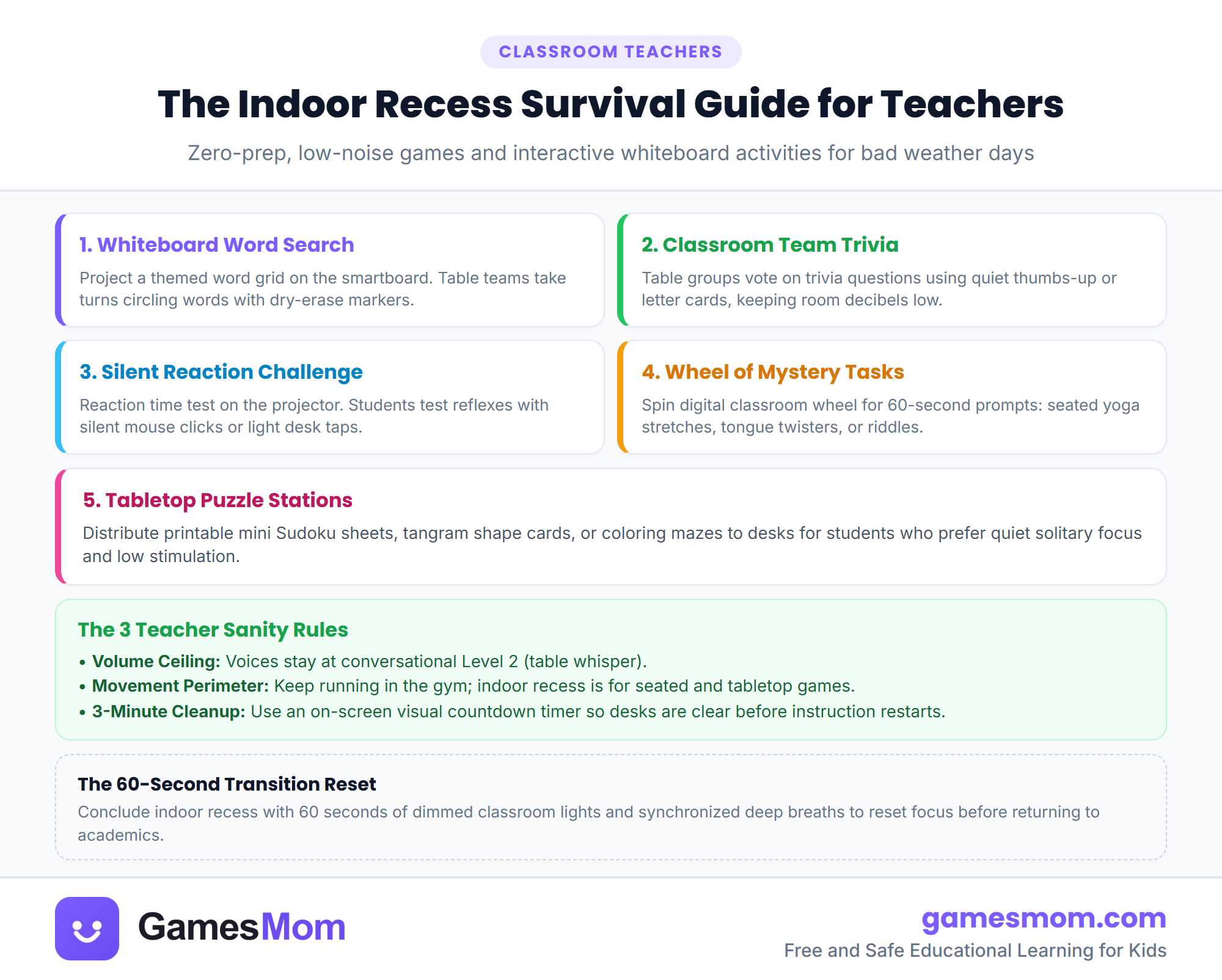
Discover ten zero-prep, low-noise games and whiteboard activities to keep students entertained and classrooms calm on rainy days.
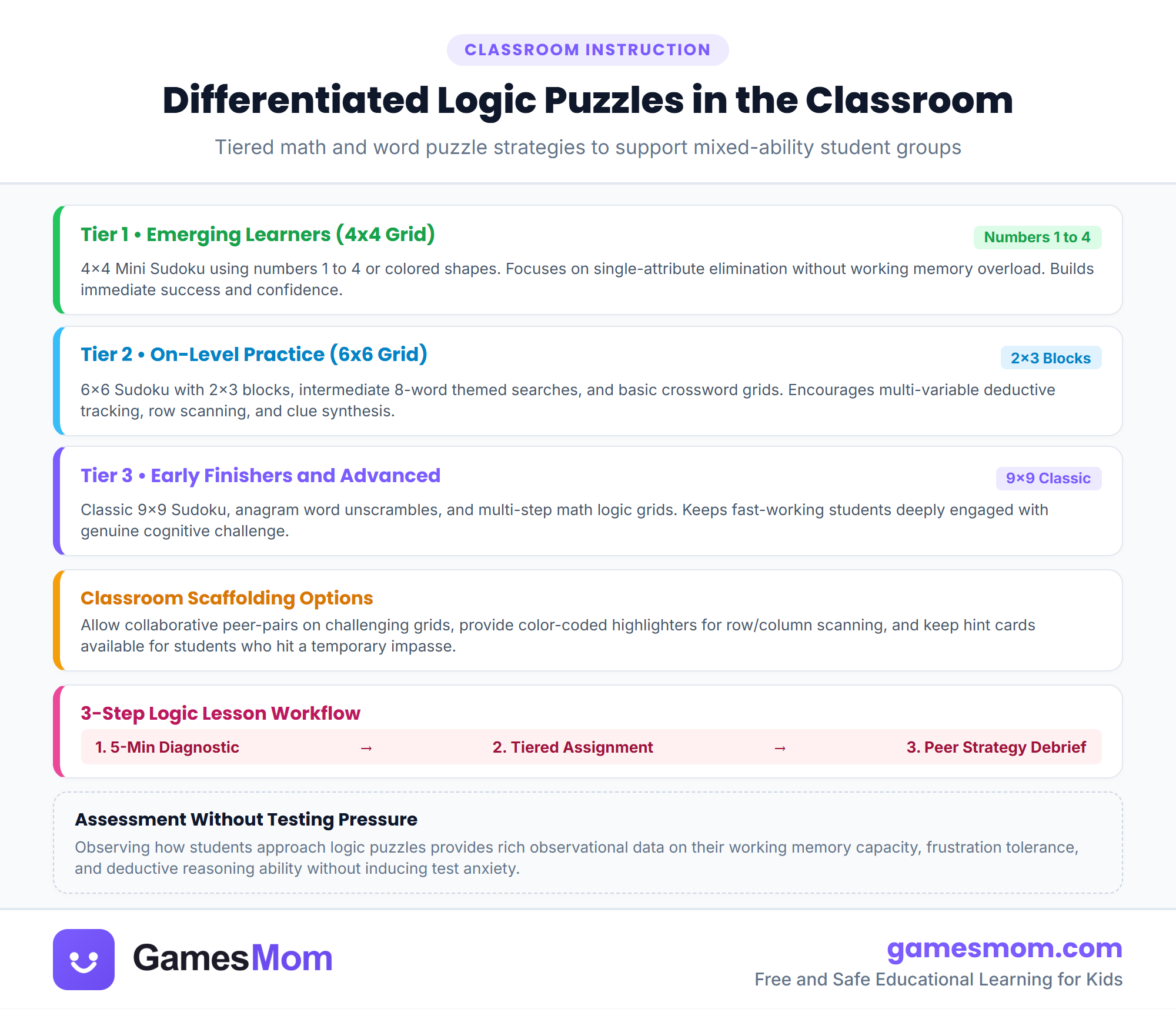
Learn how tiered puzzle grids (4x4 to 9x9 Sudoku and word searches) support mixed-ability learners and challenge early finishers.
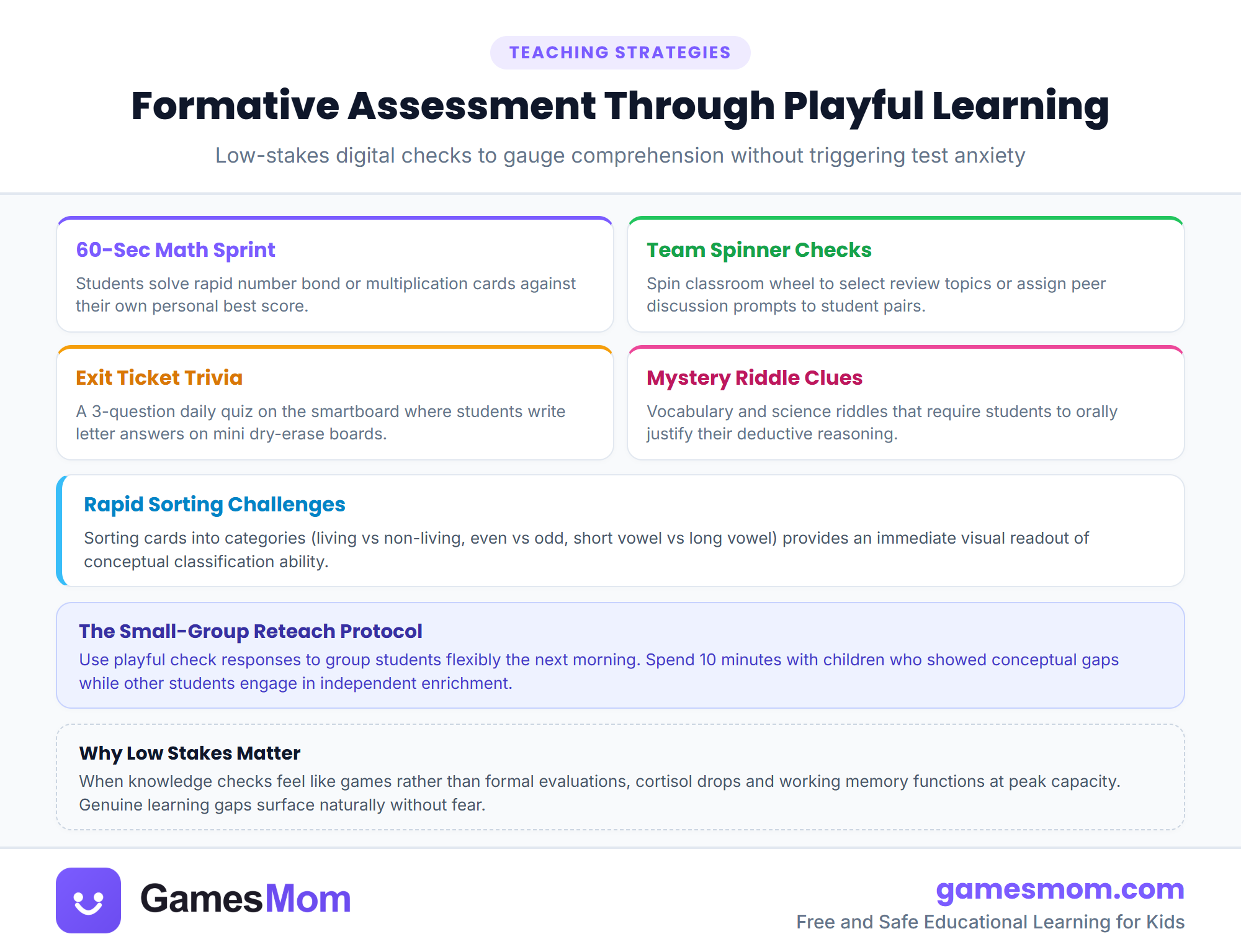
Low-stakes digital checks and playful games that show you what a student understands, without the test anxiety of a formal quiz. See the guide.
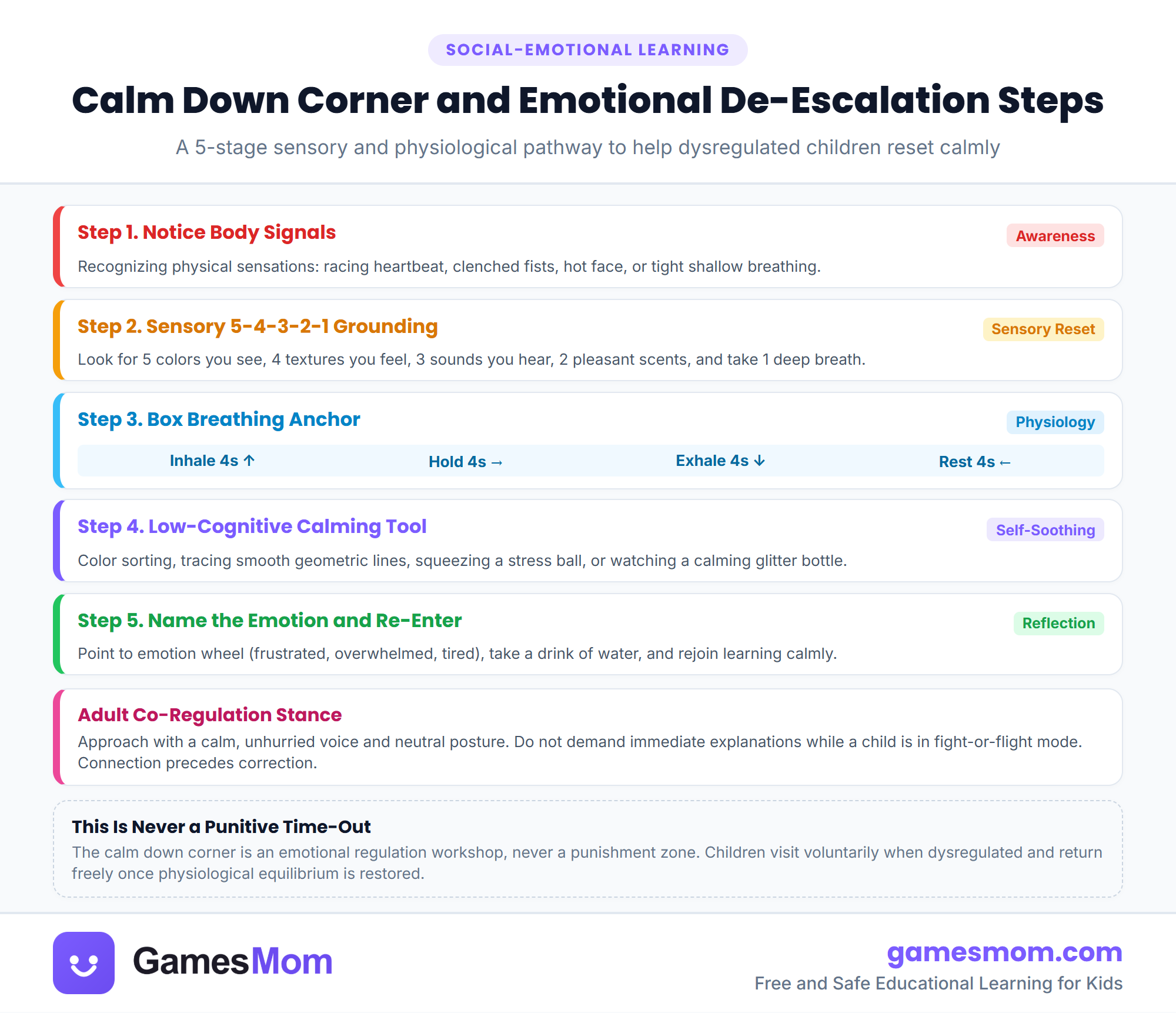
Learn the five-step sensory and cognitive pathway to help emotionally overwhelmed students reset and return to learning.
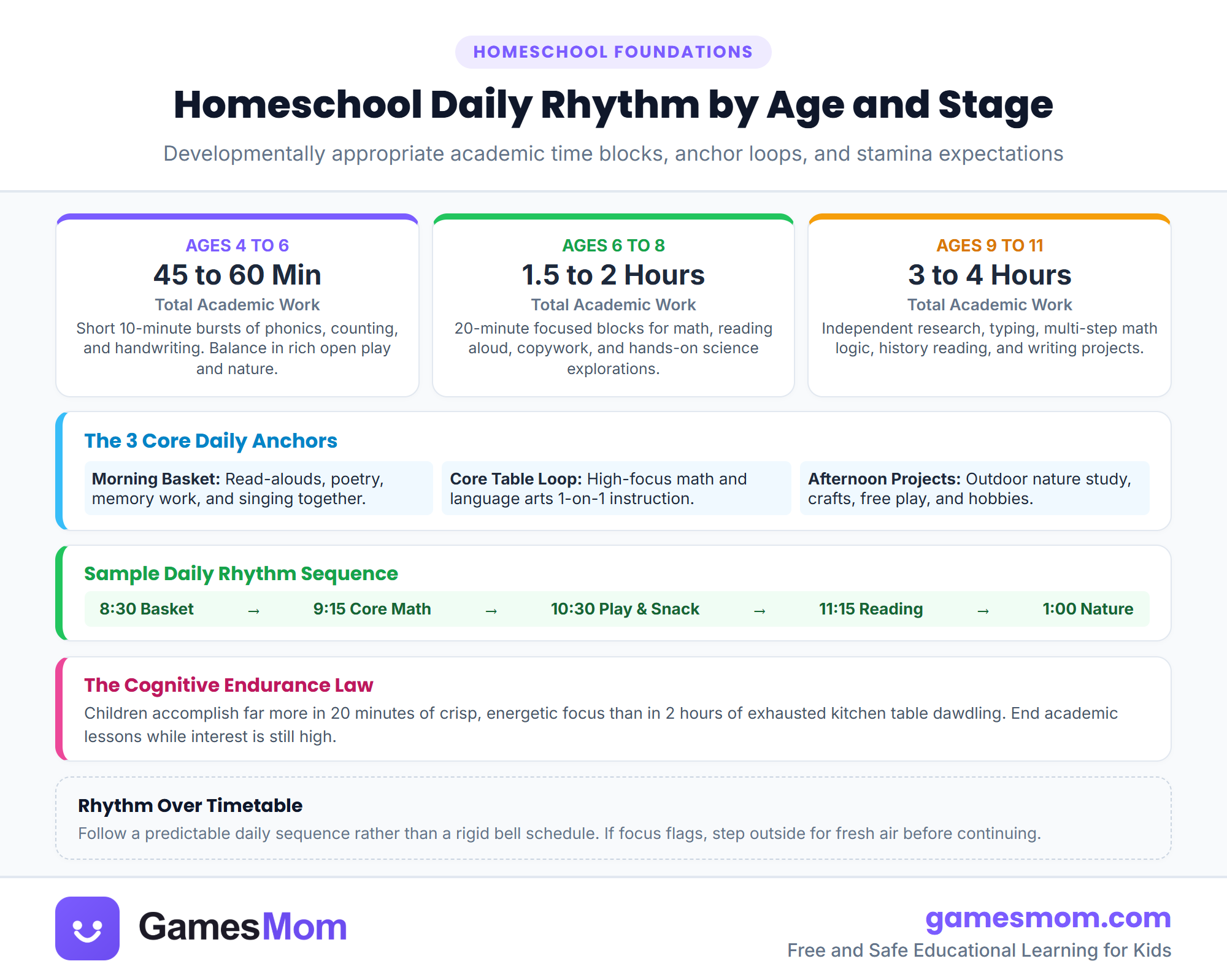
Discover realistic homeschool daily schedules and rhythms from preschool to sixth grade, balancing academics with play and rest.
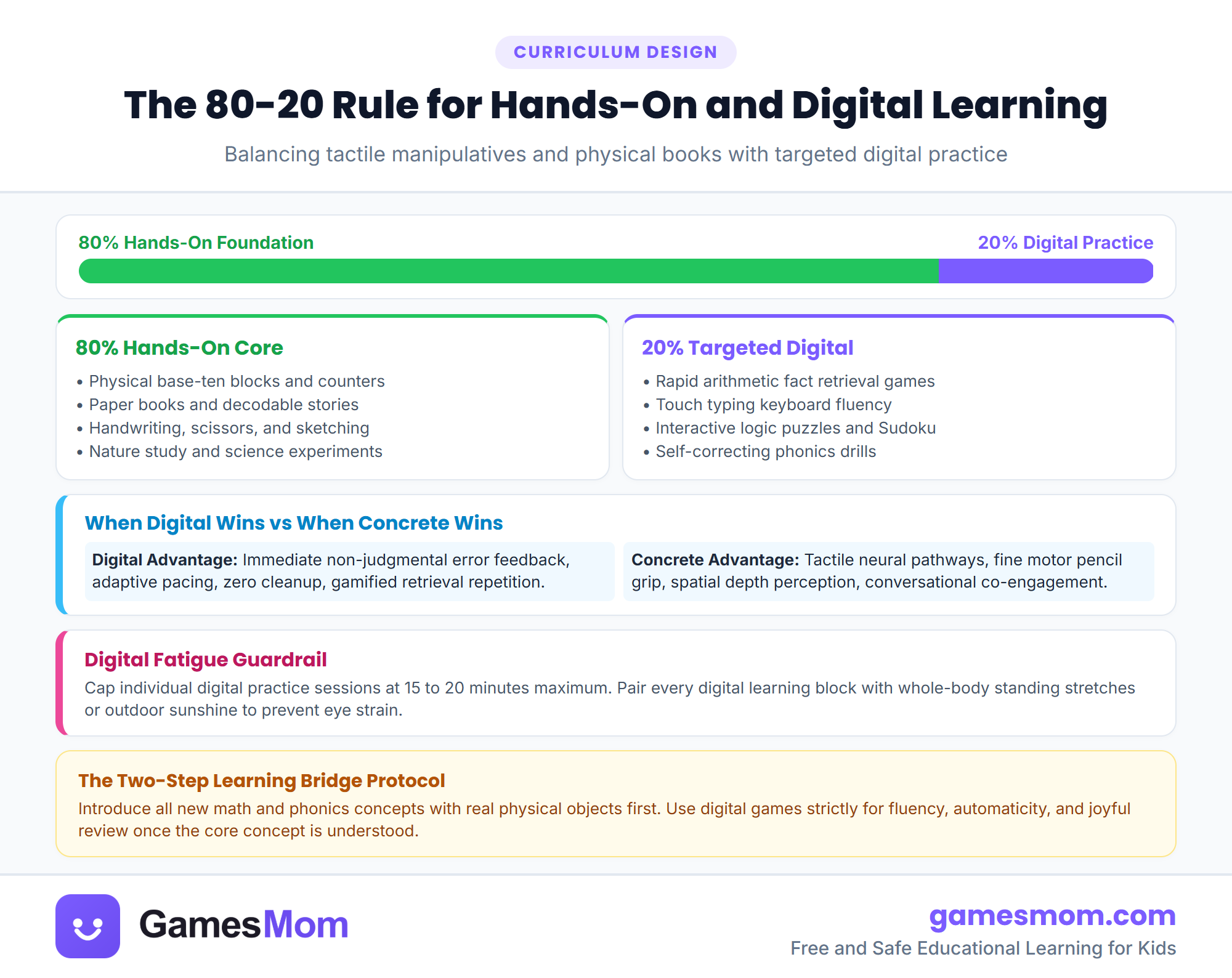
Learn how to balance eighty percent physical books and manipulatives with twenty percent purposeful digital practice for optimal retention.
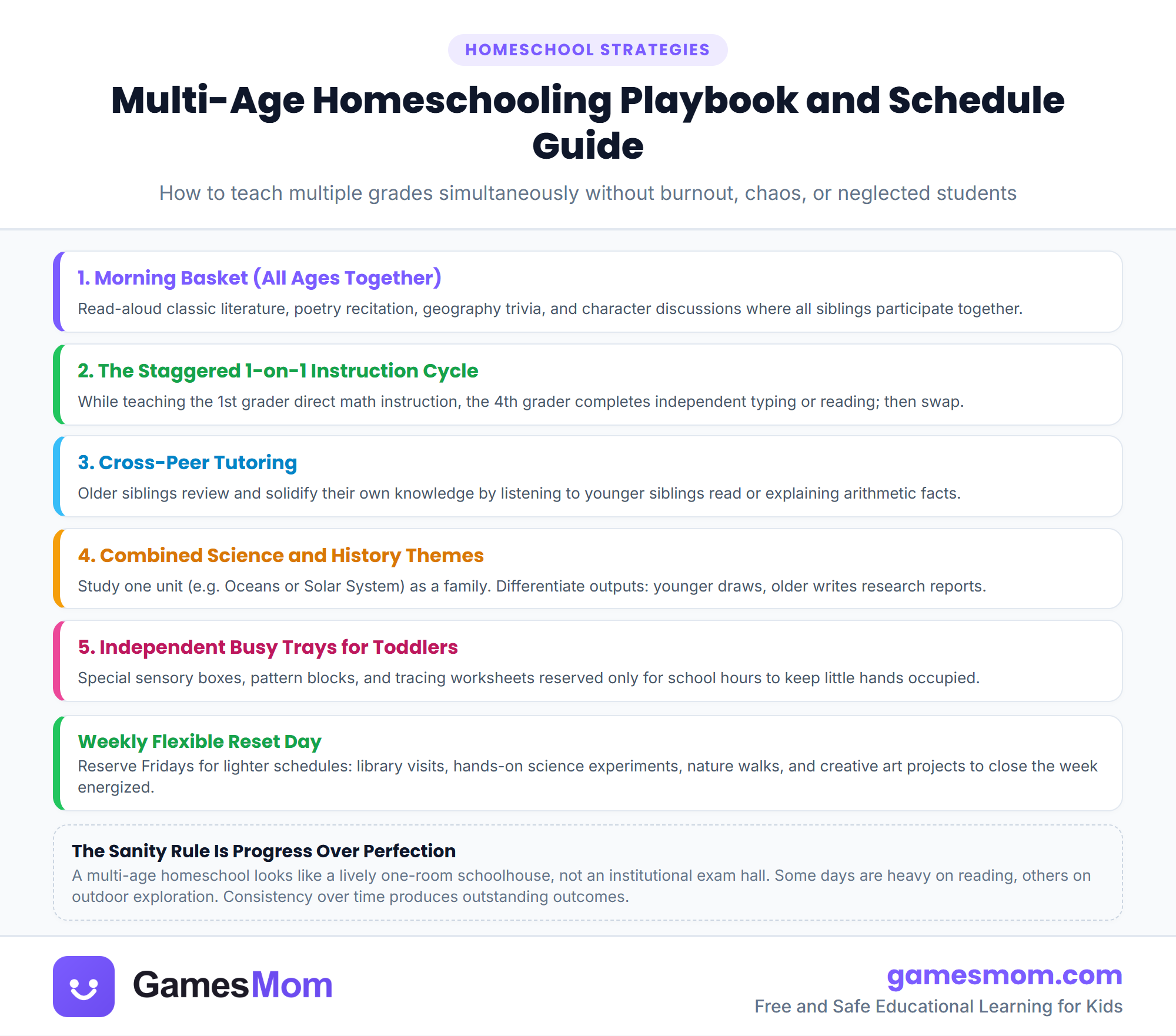
Master multi-age homeschooling with four sanity-saving strategies to teach children of different ages at the same kitchen table.
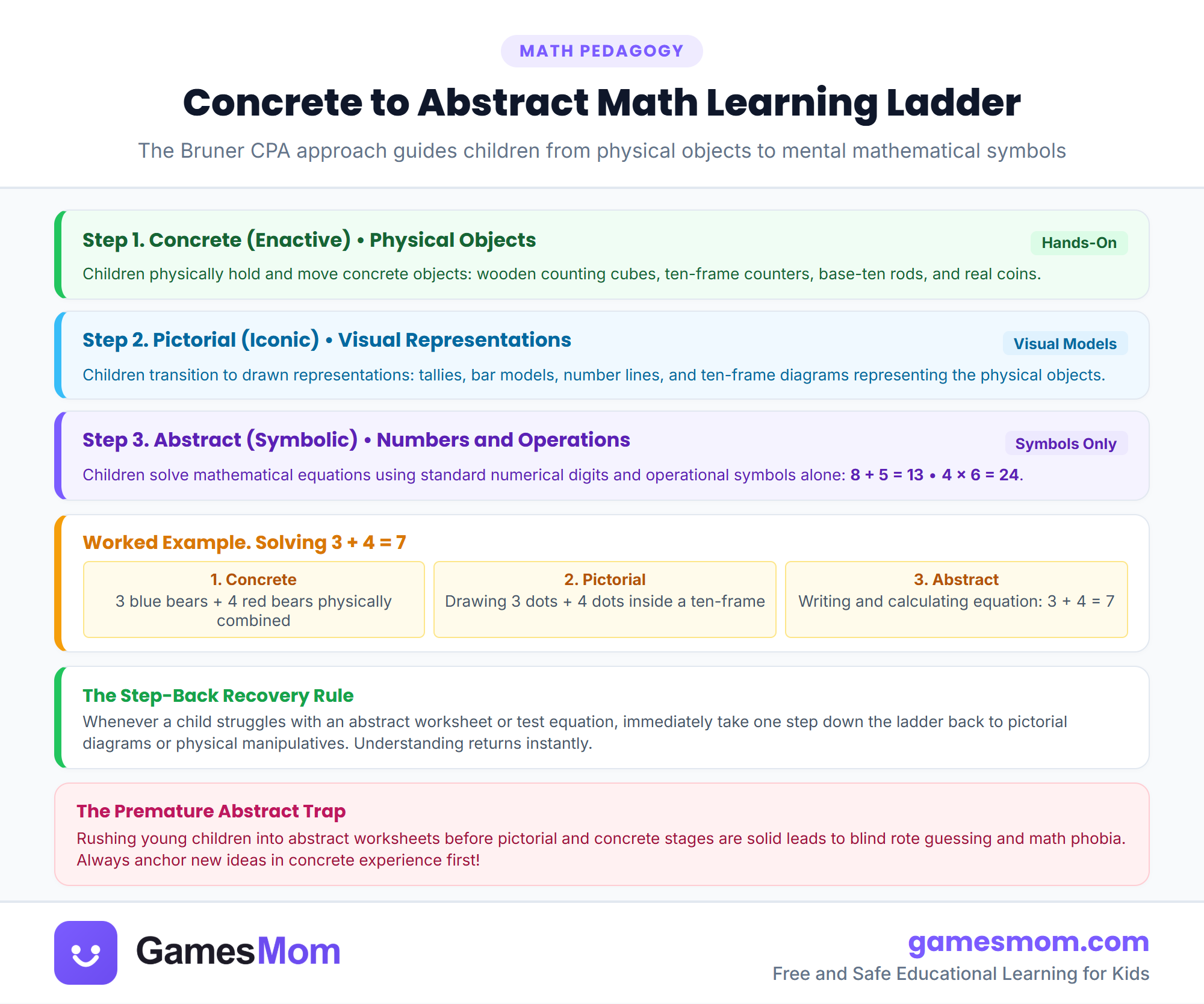
Understand the three stages of mathematical comprehension (Bruner CPA model) to help kids transition from physical counters to mental math.
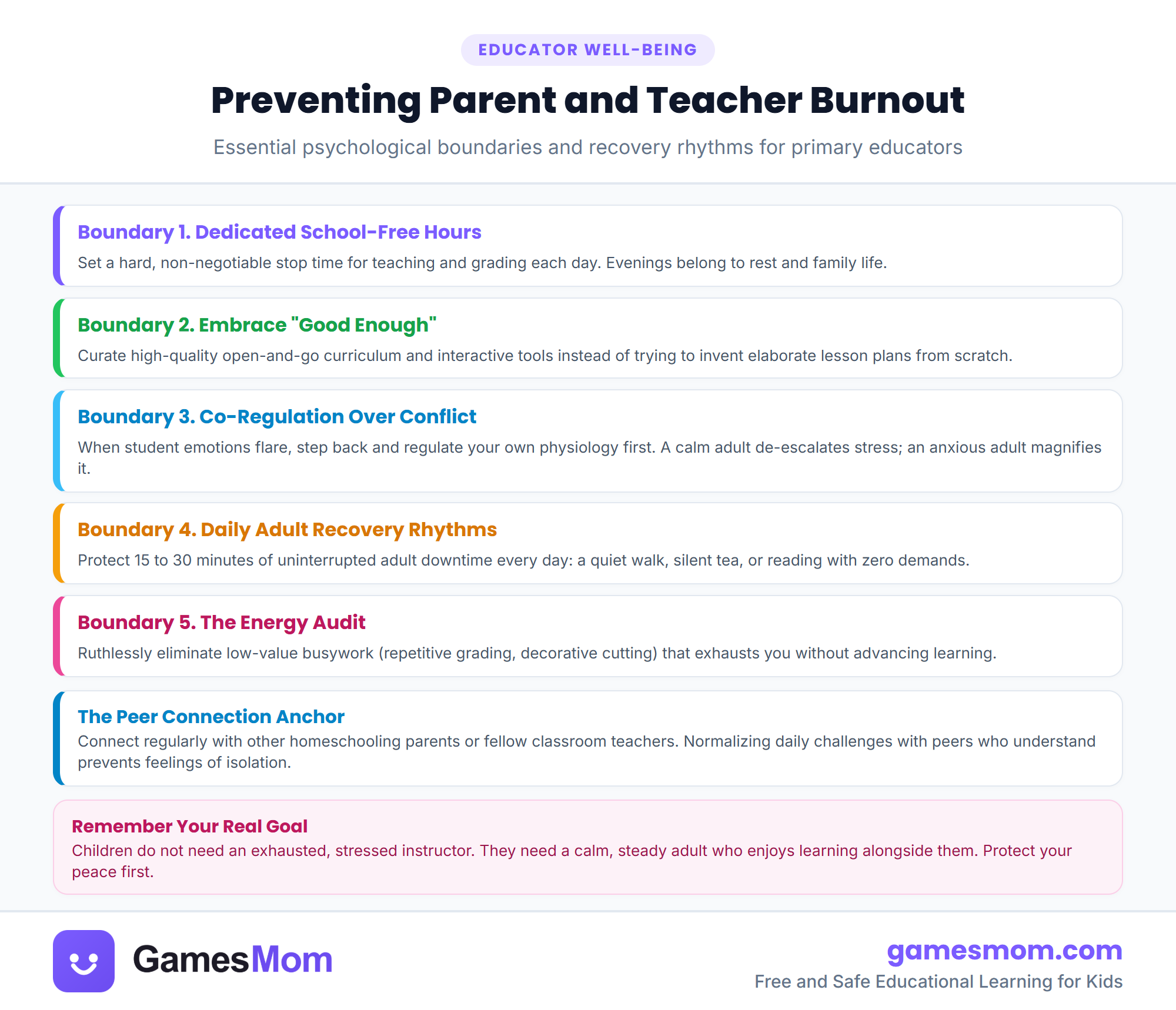
Discover four sustainable self-care habits, healthy teaching boundaries, and realistic daily expectations for homeschoolers and teachers.
We use cookies to run the site and, with your consent, for analytics and advertising. You can accept all, or keep only the essential ones. See our Cookie Policy.