
Kindergarten Games
Free games for five and six year olds, sorted in the order kindergarten teaches: letters and sounds, writing, first reading and numbers, then thinking games, art, music and first keyboard skills.
Letters and phonics
Most children know their capital letters by kindergarten. This year adds small letters, matching the two, and the sound each letter makes.
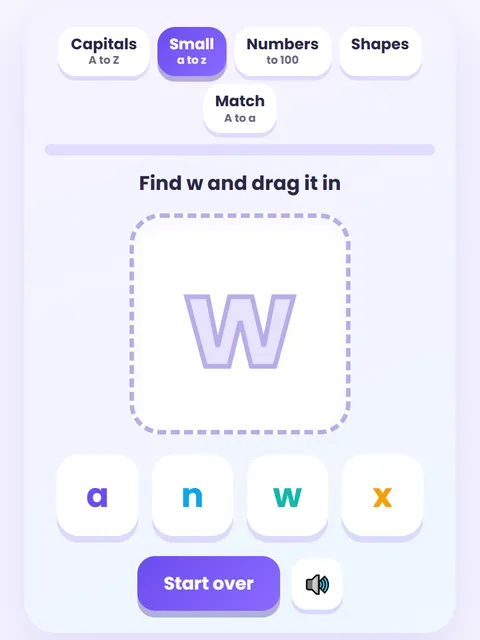
Recognize Small Letters a to z
Drag the matching small letter into the big outline.
Play now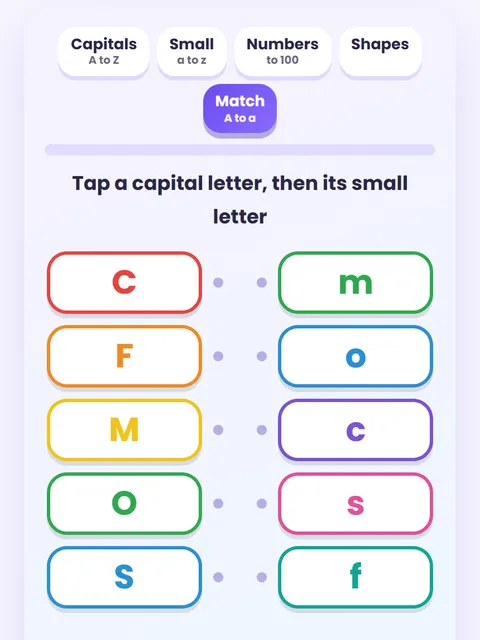
Match Capital and Small Letters
Pair each capital letter with its small letter, like A with a.
Play now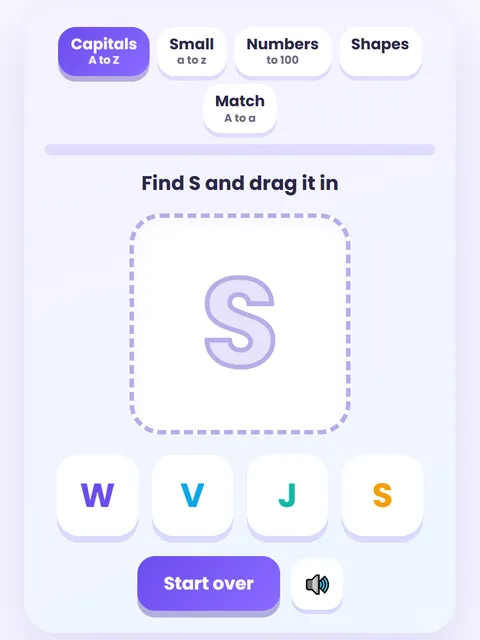
Recognize Capital Letters A to Z
A quick warm up for the letters your child already knows.
Play now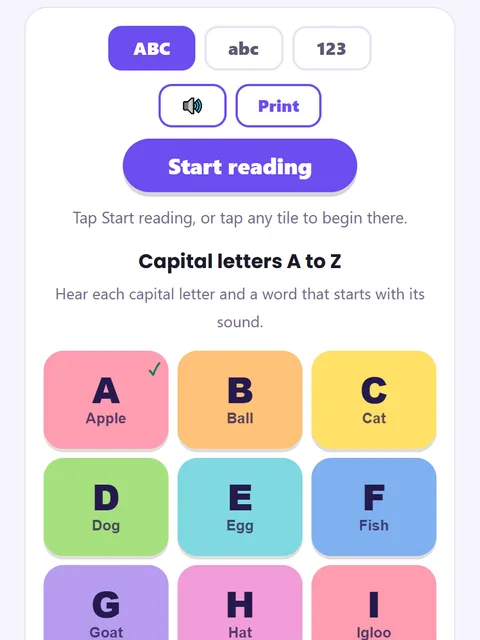
Phonics Sounds A to Z
Tap any capital letter and hear it said out loud.
Play now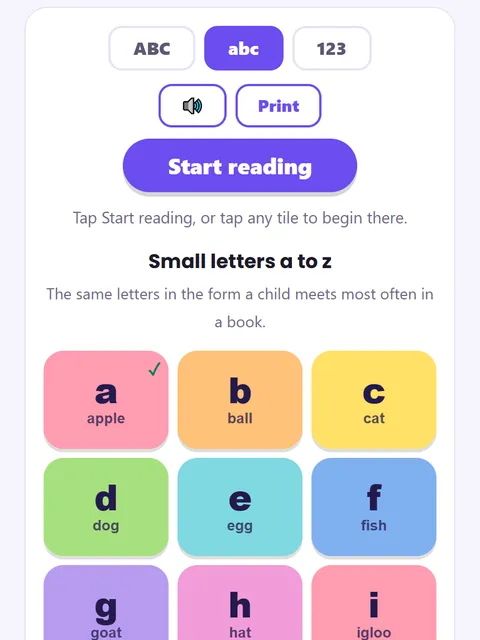
Phonics Sounds a to z
The same letters in small form, the way they appear in books.
Play now
Phonics Flashcards
Letter sounds first, then CVC words like cat, hat and big.
PracticeWriting letters and numbers
Tracing on a screen fixes the starting point and stroke order before pencil habits set. Follow it with a crayon at the table.
Write Capital Letters A to Z
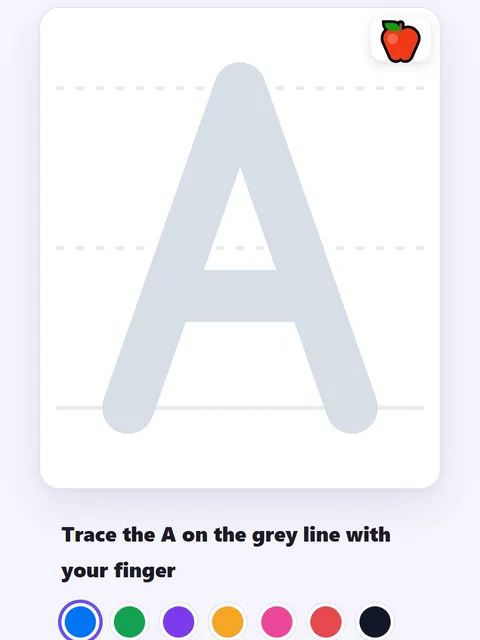
Watch the strokes, then trace each capital letter in order.
Play now
Write Small Letters a to z
Small letters take more control, so expect them to be harder at first.
Play now
Write Numbers 1 to 50
Trace each number, from 1 all the way up to 50.
Play nowSight words and first reading
Words like the, and and see turn up on almost every page of an early reader. A few minutes of practice a day is enough.
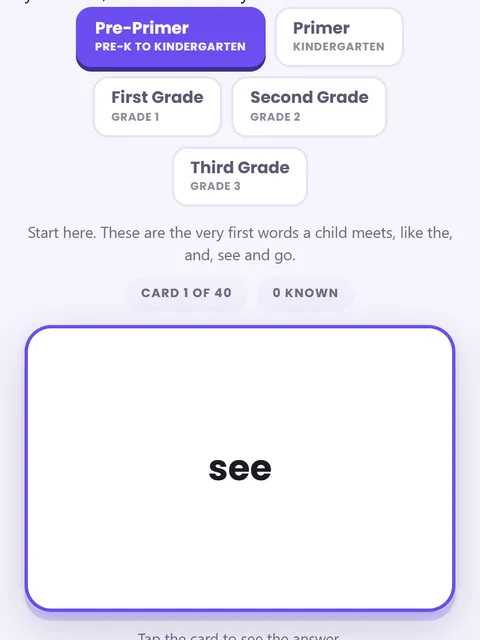
Kindergarten Sight Words Flashcards
Start with the Pre-Primer deck, then move on to Primer.
Practice
Word Match
Match the picture to the correct word.
Play now
Spelling Test Practice
Hear each word in a sentence, then type it. 20 words a round.
Play now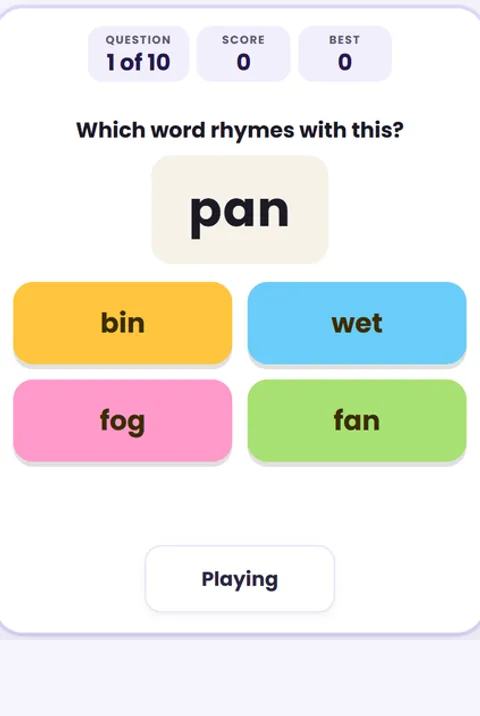
Phonics
Match rhymes and beginning sounds to read.
Play nowKindergarten math games
Kindergarten math is mostly counting, knowing written numbers, comparing amounts and adding within ten.
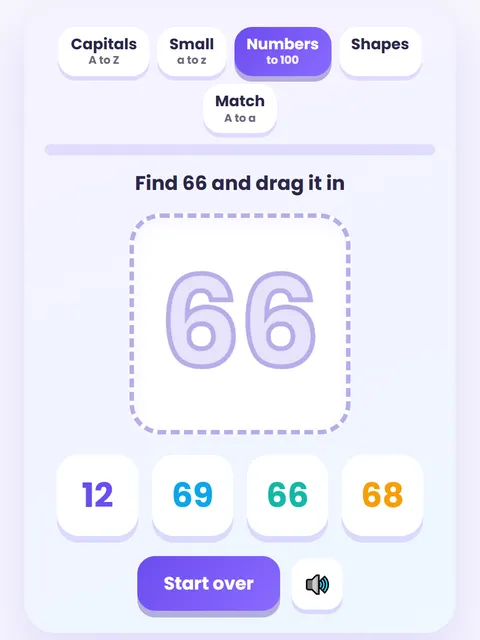
Recognize Numbers 1 to 100
Drag the matching number into its outline, in a mixed up order.
Play now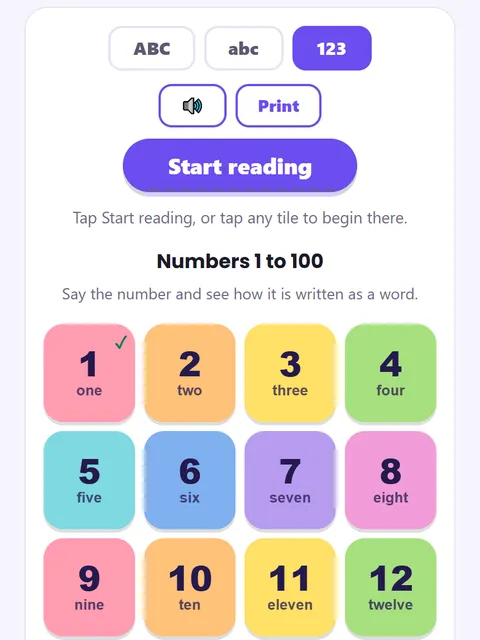
Hear Numbers 1 to 100
Tap a number to hear it said out loud.
Play now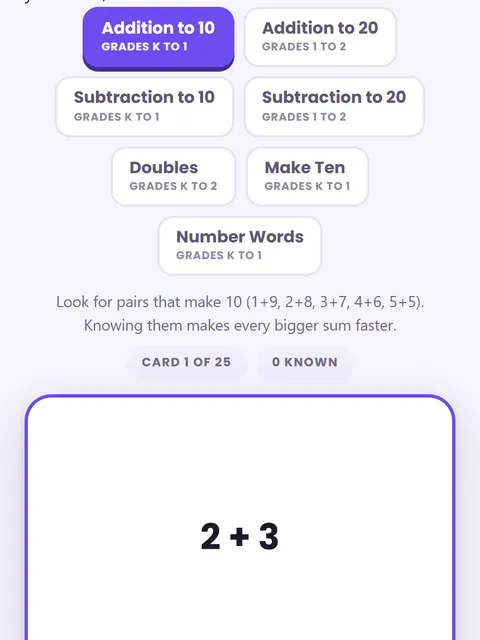
Addition and Subtraction Flashcards
Try the Addition to 10, Subtraction to 10 and Make Ten decks.
Practice
Counting
Count the objects and tap the right number.
Play now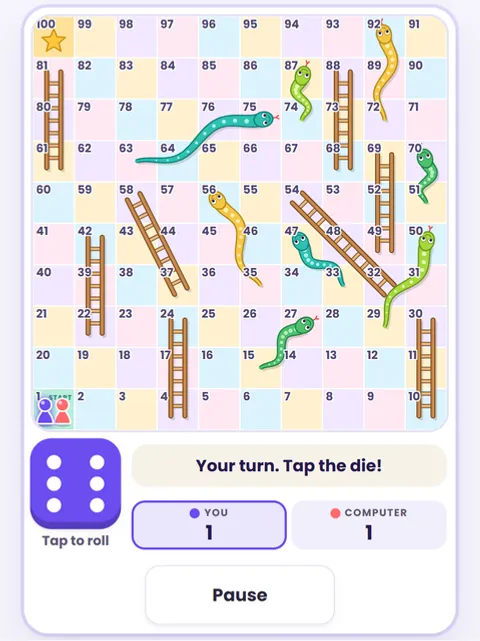
Snakes and Ladders
Roll the die, climb ladders, slide down snakes and race to 100.
Play now
Dice Roller
Roll up to six dice and get the total.
Play now
Learn Numbers 1 to 20
See each number, hear it, then count the pictures one by one.
Play nowThinking and memory games
Memory, patterns and puzzles build the focus a child needs for everything else on this page.
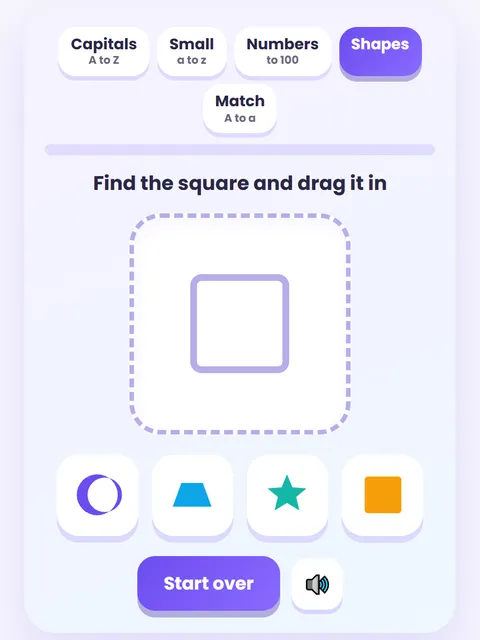
Recognize Shapes
Drag each shape into its outline and learn its name.
Play now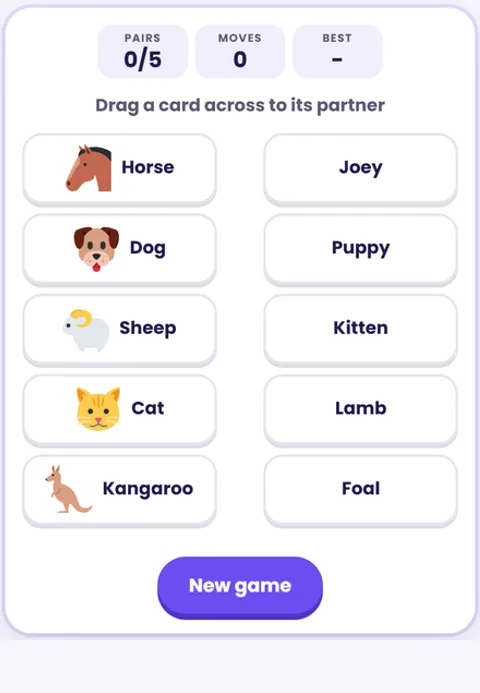
Matching Games
Try animal sounds, animal babies or numbers and words. A grown-up can read the words aloud.
Play now
Memory Match
Flip the cards and find every matching pair.
Play now
Pattern Memory
Watch the squares light up, then tap them back.
Play now
Color Sequence
Watch the colors, then repeat the growing pattern.
Play now
What's Missing
Remember the pictures, then spot the missing one.
Play now
Odd One Out
Spot the picture that is different.
Play now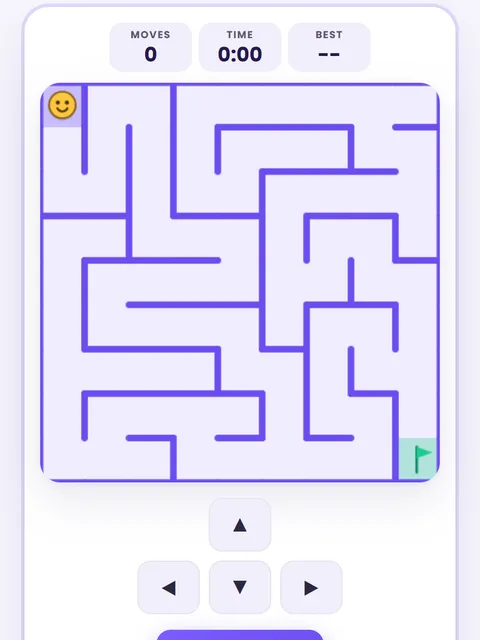
Maze
Find your way from the start to the flag.
Play now
Jigsaw Puzzle
Drag the pieces into place. Fresh original pictures every time.
Play now
Color Sort
Pour the colors until every tube holds one color.
Play now
Shape Matching
Hear the shape, then tap the one that matches.
Play nowColoring, painting and music
Painting and coloring build the hand control that neat handwriting needs, with none of the pressure to get a letter right.
Coloring Pages
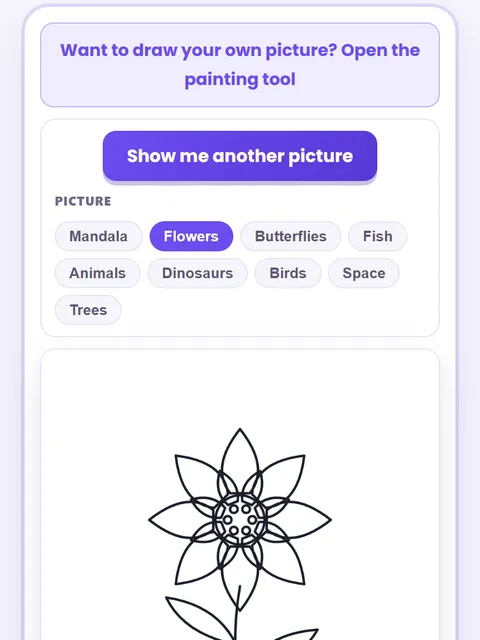
Tap a shape to fill it with color. A new picture every time.
Play now
Paint and Draw
Brushes, stamps, text and shapes, plus a flip book to make a drawing move.
Play now
Nursery Rhymes
Read along with each rhyme, then print a sheet to trace the words.
Play now
Virtual Piano
Tap the keys to play music and easy songs.
Play nowFirst keyboard games
Finding letters on a keyboard is good letter practice, and it makes school computer time less daunting.
Just for fun
Quick games for a break between the learning ones.
Printable worksheets and flashcards
Print these for the table, a reading corner or a long car ride.
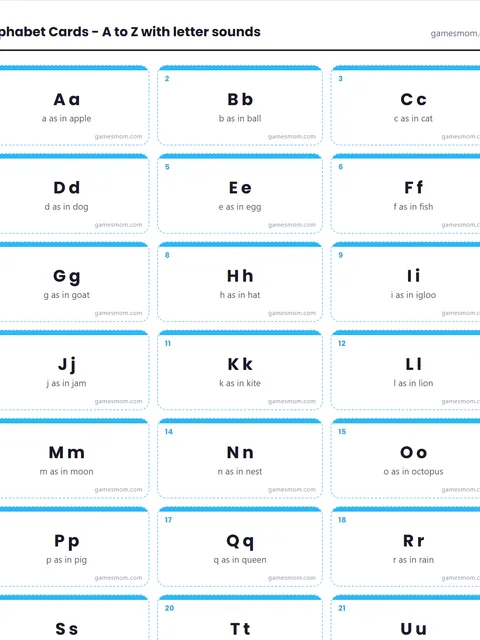
Printable Alphabet Flashcards
A to Z letter cards with a sound word on each.
Print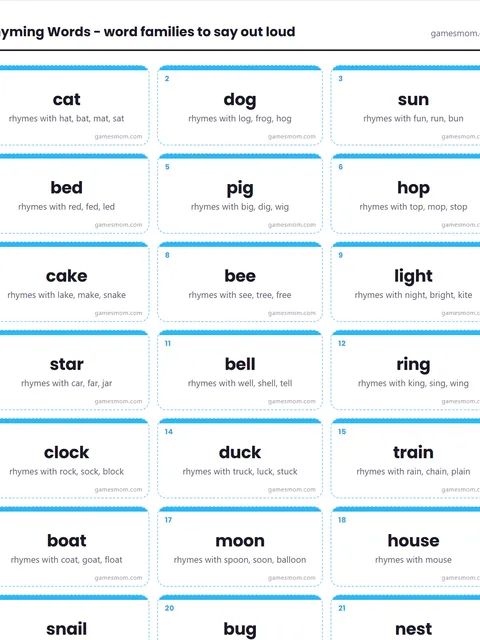
Printable Rhyming Words Flashcards
Rhyming families as cut out cards.
Print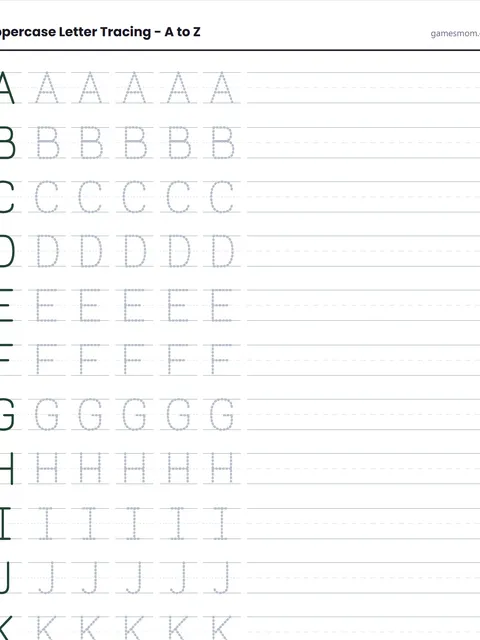
Letter Tracing Worksheet
Trace every capital letter on ruled lines.
Print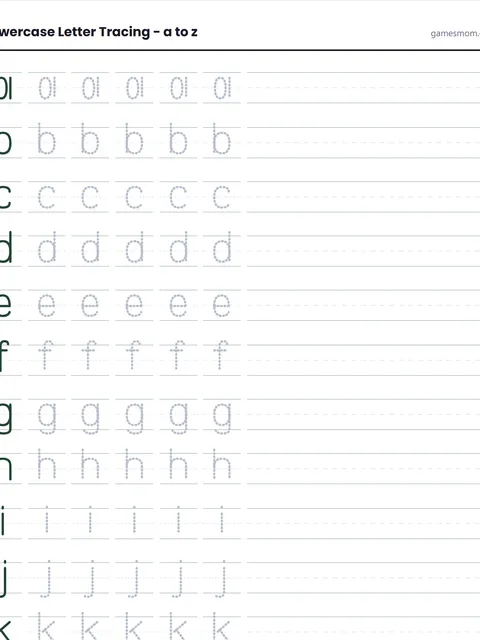
Lowercase Letter Tracing Worksheet
Trace every small letter on ruled lines.
Print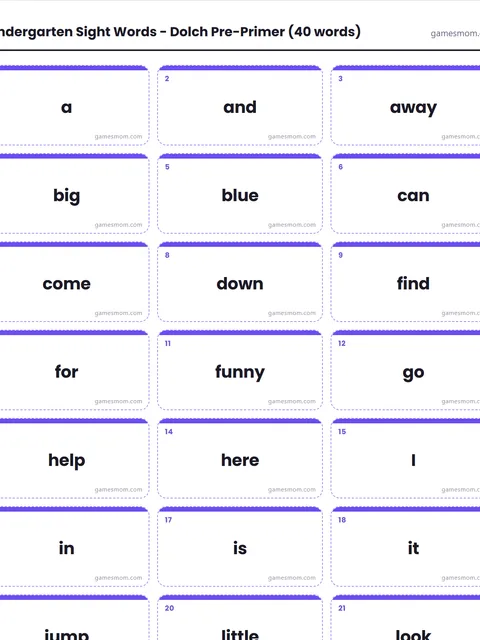
Printable Kindergarten Sight Words Flashcards
All 40 Dolch pre-primer words as cut out cards.
Print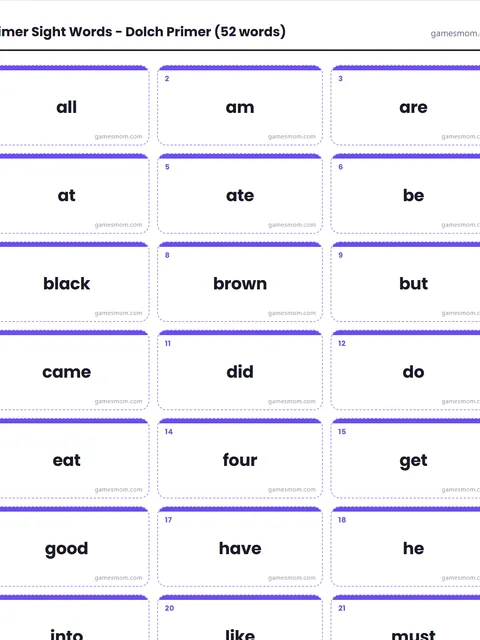
Printable Primer Sight Words Flashcards
The 52 Dolch primer words, ready to cut out.
Print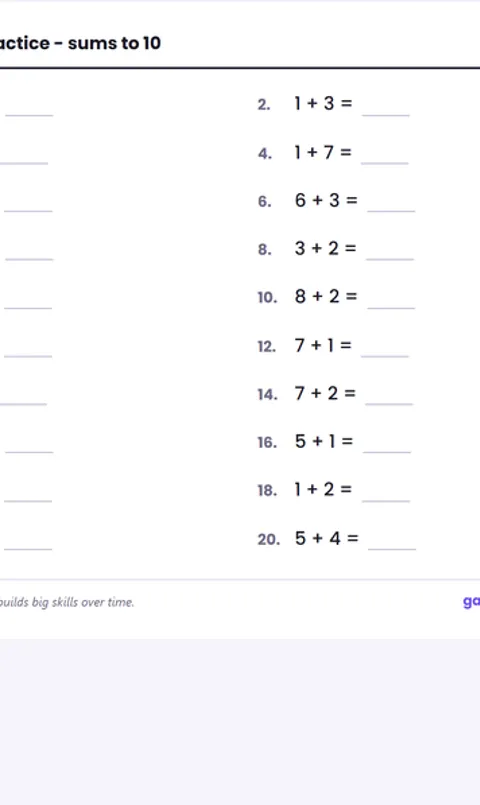
Addition to 10 Worksheet
Twenty fresh addition problems every print.
Print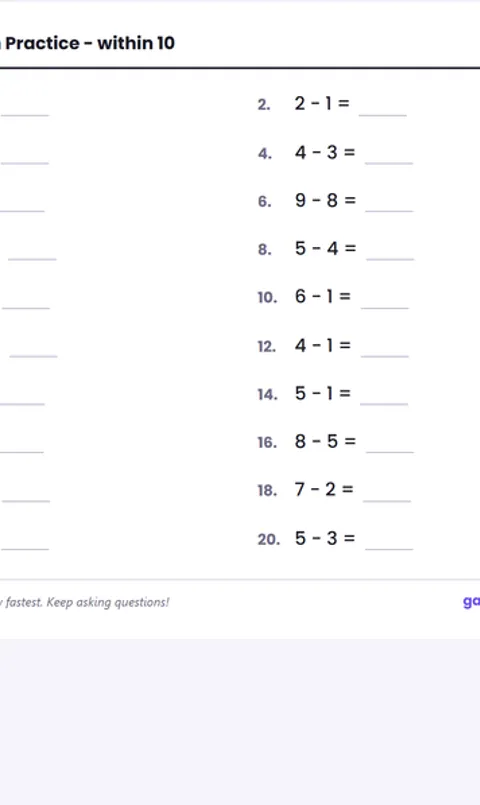
Subtraction to 10 Worksheet
Twenty take away problems, new every print.
Print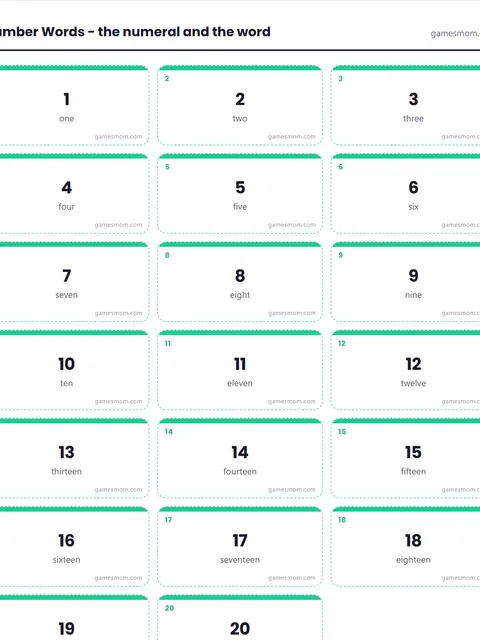
Printable Number Words Flashcards
Numerals paired with their words.
Print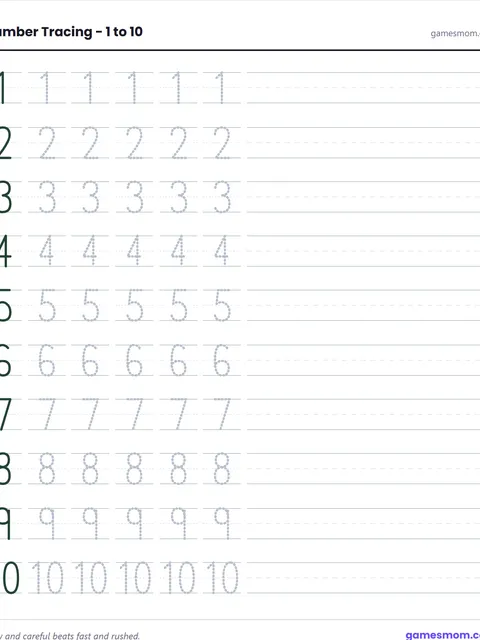
Number Tracing Worksheet
Trace every number from 1 to 10.
Print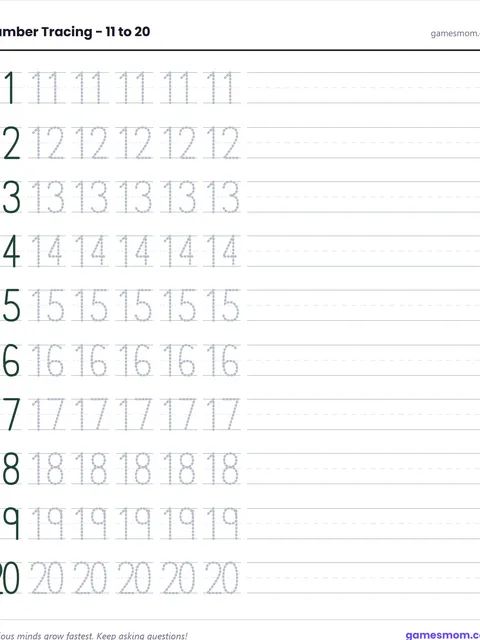
Number Tracing 11 to 20 Worksheet
Trace the teen numbers from 11 to 20.
Print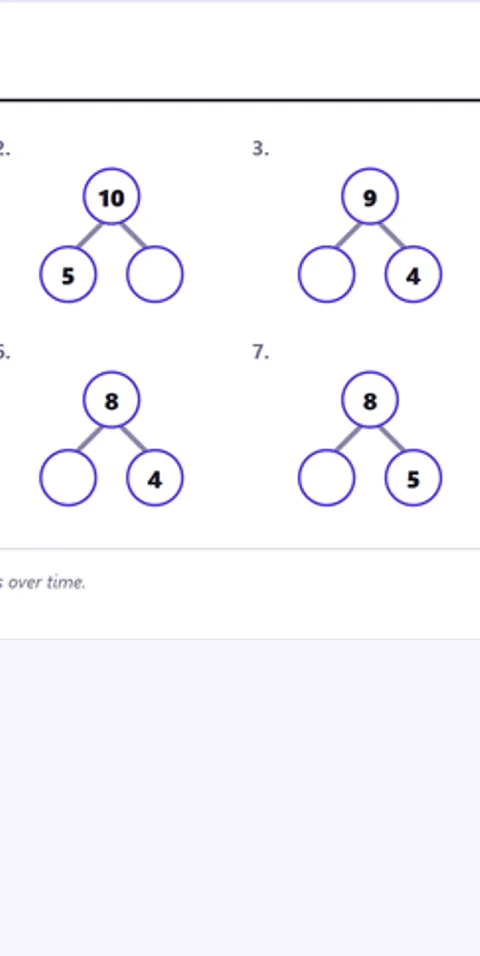
Number Bonds to 10 Worksheet
Fill the missing part in each number bond.
Print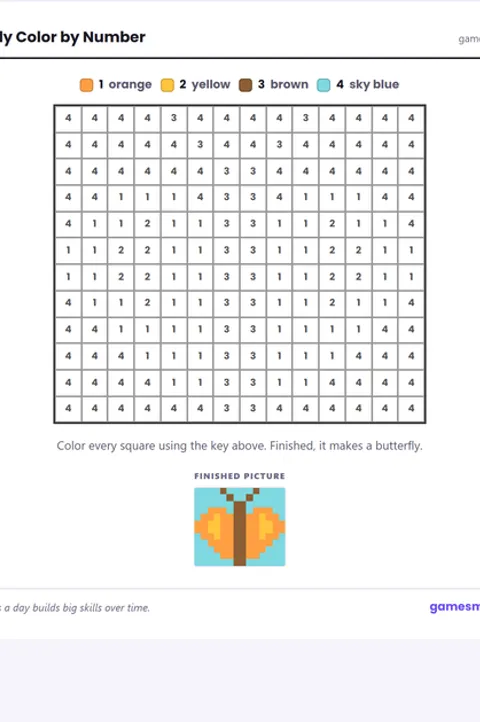
Color by Number Butterfly
Color each square by its number and a butterfly appears.
Print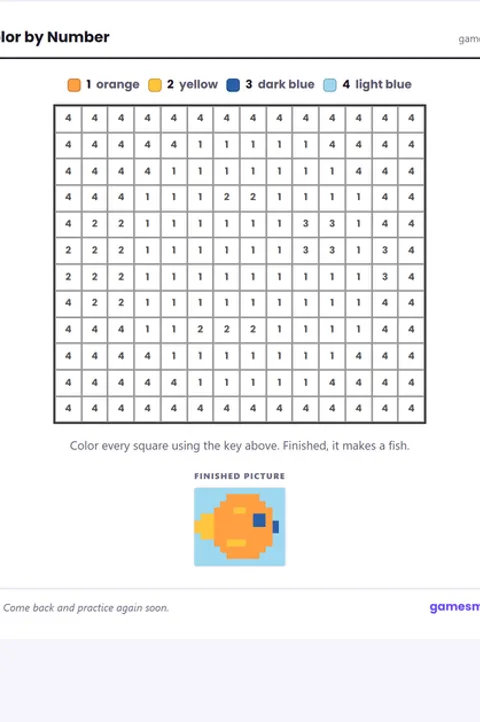
Color by Number Fish
Color each square by its number and a fish appears.
Print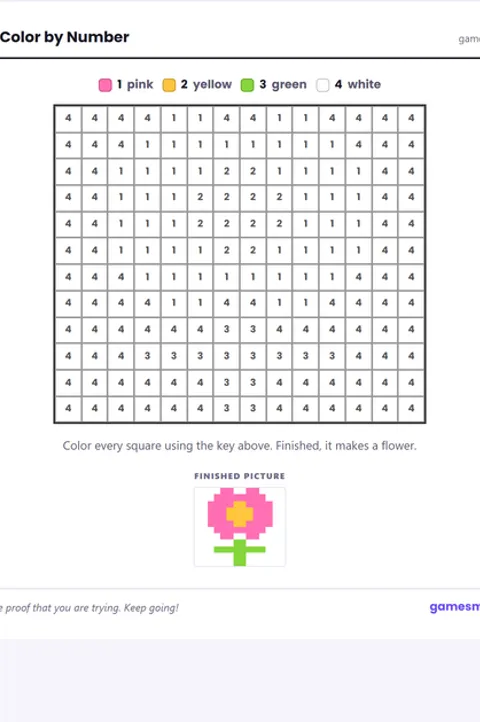
Color by Number Flower
Color each square by its number and a flower appears.
Print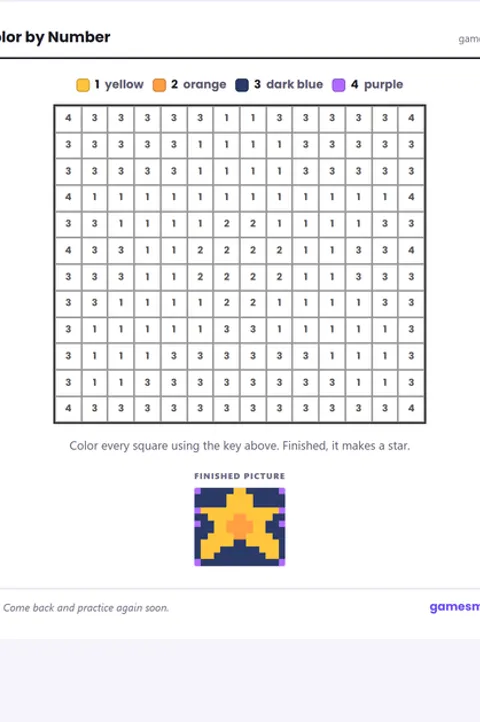
Color by Number Star
Color each square by its number and a star appears in the night sky.
Print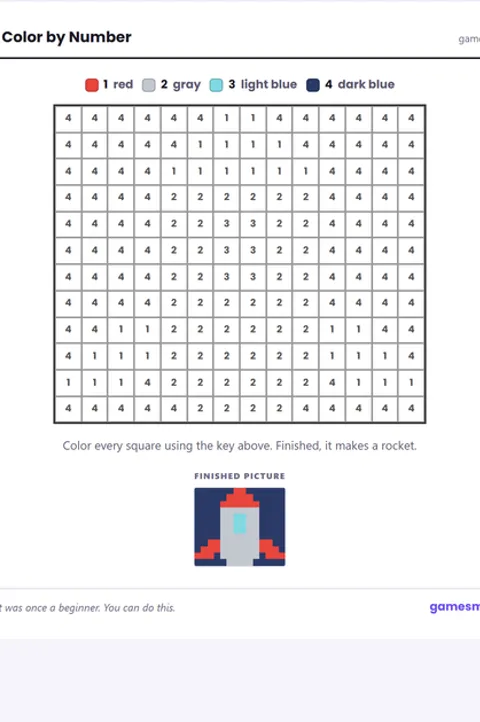
Color by Number Rocket
Color each square by its number and a rocket appears.
Print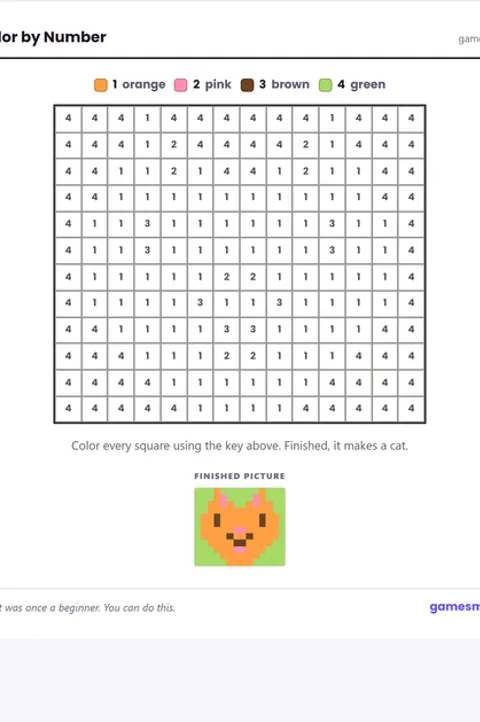
Color by Number Cat
Color each square by its number and a cat face appears.
Print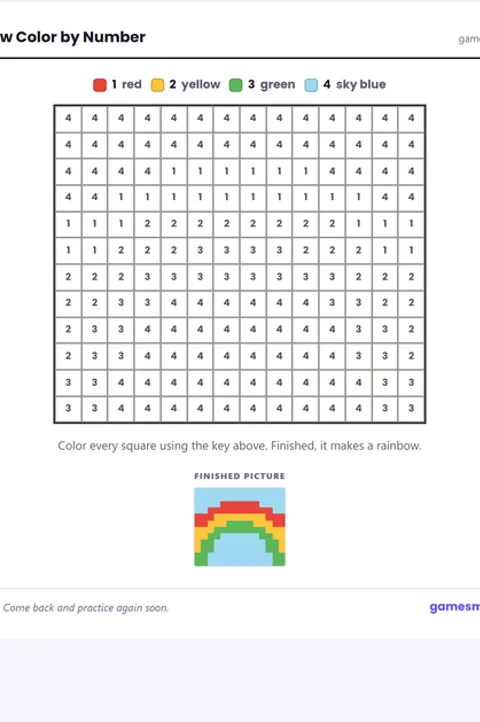
Color by Number Rainbow
Color each square by its number and a rainbow appears.
Print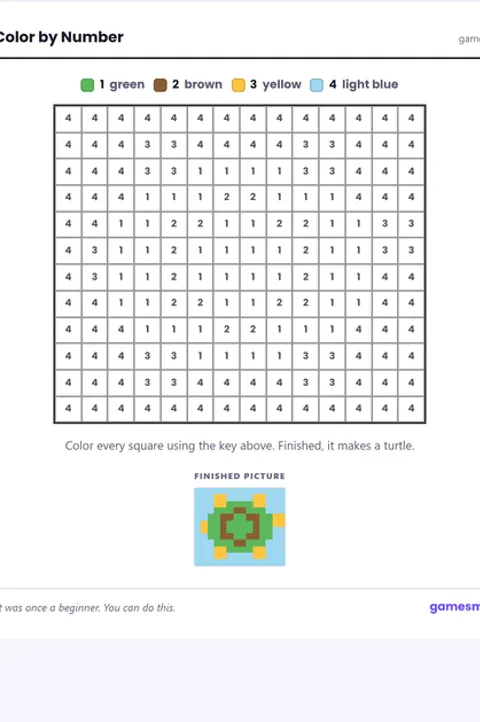
Color by Number Turtle
Color each square by its number and a turtle appears.
PrintHow to choose games for kindergarten
Kindergarten is the year a child moves from recognizing to producing. A four year old can find the letter B on a page. A five year old is expected to write it, sound it out and use it in a word. That shift is the most useful thing to know when choosing kindergarten games, because a game that only asks a child to tap the right box no longer moves them forward.
So look at what the child makes. Tapping a correct answer from four choices shows recognition, which most children already have by five. Tracing a letter, counting out objects or building a word shows the skill the classroom is working on. Keep the easy tapping games for warm ups and confidence, then move to something with an output.
Two limits still apply. Reading is only starting, so instructions need to be spoken, shown or obvious from the picture. And a session that runs past about ten minutes stops teaching and starts filling time.
Letters have three separate parts
Naming a letter, knowing the sound it makes and writing it are three different skills, and a child can be fluent at one and lost at another. That is why the letters, phonics and writing sections above are separate. Practice them as different activities rather than assuming one covers the rest.
Two details make a letter game work. The letters should come up in a mixed order, or a child just recites the alphabet song without reading the shape in front of them. And the set of choices should be small, because a screen of twenty six tiles is a memory test rather than a reading one.
Sounds are the part most parents underestimate. Knowing that a letter is called "em" does not tell a child that it says mmm, and blending sounds into a word depends on that second piece. A few minutes of phonics a day does more than another round of naming letters a child already knows.
Why stroke order matters
Almost every letter has a correct starting point and stroke order, taught so that handwriting stays quick and readable once words get longer. A child who draws an O from the bottom, or builds an E out of four separate lines, will manage for a while and then find writing slow in first grade. The tracing tool shows each letter being written before the child traces it, and it does not count a stroke that was skipped.
Expect small letters to be harder than capitals. Capitals are mostly straight lines and simple curves, which is why they come first. Small letters need control of size and position on the line, so confident capitals and wobbly small letters for a few months is completely normal.
Painting and coloring belong in the same routine. The shoulder, elbow and wrist need to work together on big movements before a pencil can manage small ones, and filling a shape or painting a long stroke builds exactly that control. On a day when writing does not go well, a painting gives a child something to be proud of.
What kindergarten math really covers
Kindergarten number work is narrower than many parents expect. It is mostly counting reliably to twenty and beyond, matching a quantity to its written number, comparing two amounts and adding small amounts within ten. Written equations beyond that can wait.
The skill everyone assumes is already there, and often is not, is touching each object exactly once while saying one number for each. A child who recites numbers quickly but loses track when counting a group has not got it yet, and faster reciting will not fix it. Practice with real objects on the table first, then use the counting game to make the same idea a game rather than a test.
How to tell your child is ready for the next step
Blending: your child can push three sounds you say slowly into a word, without seeing it written. Sight words: they read a word instantly, with no pause to sound it out. Writing: letters start in the right place and travel the right way, which matters more than neatness. Numbers: they know 6 and 4 make 10 without counting it out.
Almost every reading wall this year is really a blending problem. If a word will not come, go back to sounds said out loud with no letters in sight. Hearing three sounds and holding them in mind has to be easy before a child can also read them off a page.
Sight words, a little every day
Sight words are the small, common words that appear constantly and often cannot be sounded out, like the, said, come and was. Many US classrooms work through the Dolch pre-primer list in kindergarten, and a child who knows those words by sight can read a simple book without stopping on every second word.
The method is short, frequent and pressure free. The sight words flashcards keep showing the words a child missed and set aside the ones they know, so a few minutes covers exactly the words that need work. Our kindergarten sight words list has the full set of words, sorted into groups.
A week of kindergarten games in ten minutes a day
A rotation survives a bad day better than a schedule does. Try letters on Monday, writing on Tuesday, numbers on Wednesday, sight words on Thursday and free choice on Friday, about ten minutes each. Repeat the same week for a month before changing anything, since repetition is what makes a skill automatic.
Sit alongside for the first minute or two. Rather than correcting, name what your child is doing out loud: "That one starts at the top." "You counted five." Better still, let them catch you out. Trace a letter backwards or count the same object twice, and a five year old who gets to correct a grown-up will happily play far longer.
If all of this feels easy, try our 1st grade games for longer words and sums past ten. If it is a struggle and your child is on the young side of five, there is nothing wrong with spending a few more months on preschool games.