
Calm Down Corner and Five Steps to De-Escalate Guide
Learn the five-step sensory and cognitive pathway to help emotionally overwhelmed students reset and return to learning.
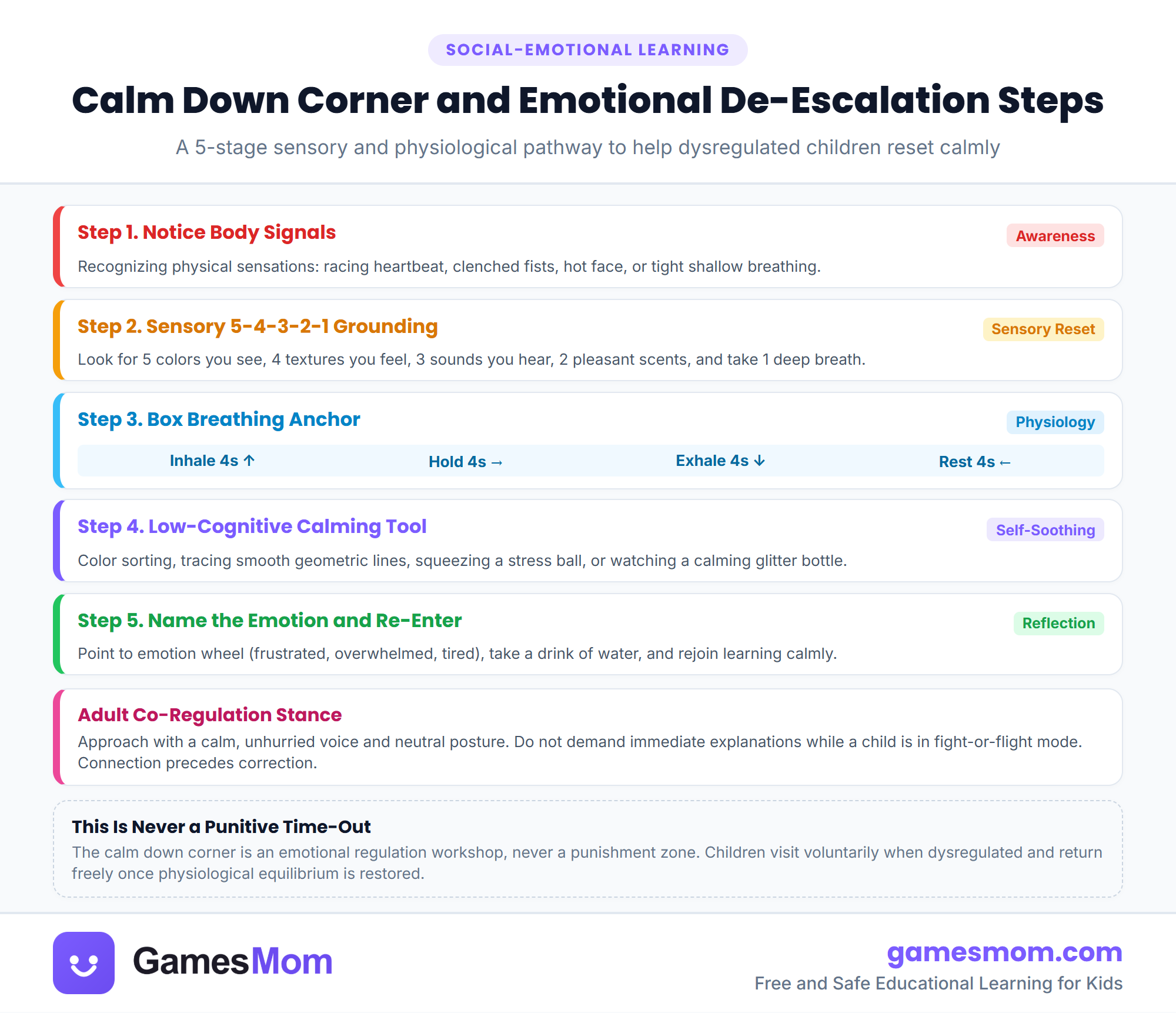
- A calm-down corner is an emotional regulation sanctuary, never a punitive time-out space.
- Deep breathing physically activates the parasympathetic nervous system to lower heart rates.
- The 5-4-3-2-1 sensory grounding exercise interrupts amygdala hijack and panic cycles.
- Low-stimulation focus tasks like gentle color sorting bridge the return to academic work.
- Perry The Neurosequential Model in Education: Trauma-Informed Classroom Practice
- Kuypers The Zones of Regulation Framework
Why emotional regulation must precede academic reasoning
When a child experiences overwhelming frustration, anger, or sensory overload, their brain enters a fight-or-flight response. The amygdala takes control, and blood flow to the prefrontal cortex drops. In this dysregulated state, verbal lecturing or demands to complete work only intensify the meltdown. The child brain is biologically incapable of logical reasoning until their nervous system feels safe. Explore our educator guidance in homeschool socialization and emotional support.
A calm-down corner is a designated quiet space equipped with sensory tools to help students self-regulate. Crucially, it must never be used as a punitive time-out or discipline zone.
Framing the space as a positive reset station teaches children that having big emotions is normal, and that learning how to manage them is a life skill.
The five sequential de-escalation steps
Step 1 is recognizing physical body signals. Teach children to notice tight fists, clenched jaws, or a racing heart. Identifying the physical sensation without shame is the first step toward regaining control.
Step 2 utilizes visual box breathing. Inhale for four counts, hold for four counts, exhale for four counts, and hold empty for four counts. Deep diaphragmatic breathing stimulates the vagus nerve, signaling the heart rate to slow down.
Step 3 is the five-four-three-two-one sensory grounding technique. The child identifies five things they see, four things they can touch, three sounds, two scents, and takes one deep breath. This pulls attention away from internal distress back into physical reality.
Step 4 offers a calming focus task. Gentle color sorting, mandala line coloring, or squishing a tactile stress ball engages the hands. Check our soothing online tool color sort game.
Step 5 is reflection and return. Once the child feels centered, they identify what triggered the upset and rejoin the group with dignity.
Setting up an effective calm down area
Choose a quiet corner away from high-traffic classroom doors. Furnish the space with comfortable cushions, a small rug, visual feeling posters, and a visual timer.
Include a calm-down basket with weighted lap pads, noise-dampening headphones, sensory liquid timers, and soft drawing supplies. Keep materials simple so the space remains low-stimulation.
Introduce the calm-down corner when students are calm and happy. Role-play how to use the breathing poster and how to clean up when finished so students feel comfortable using it independently.
Frequently asked questions
How is a calm-down corner different from a time-out?
A time-out is a punitive separation imposed by an adult for bad behavior. A calm-down corner is an invitation for the child to use sensory tools to regulate their nervous system voluntarily.
How long should a student stay in the calm-down corner?
Most children regulate within five to ten minutes. Using a visual liquid timer helps them gauge their time without feeling abandoned.
What if a student uses the calm-down corner to avoid academic work?
If a child frequently visits the corner during specific subjects like math, it signals academic anxiety or frustration. Pair the calm-down reset with extra learning support once they return.