
The 5-Minute Classroom Brain Break Matrix for Teachers
Reset student focus in five minutes with a research backed 4-quadrant brain break matrix designed for elementary classrooms and homeschoolers.
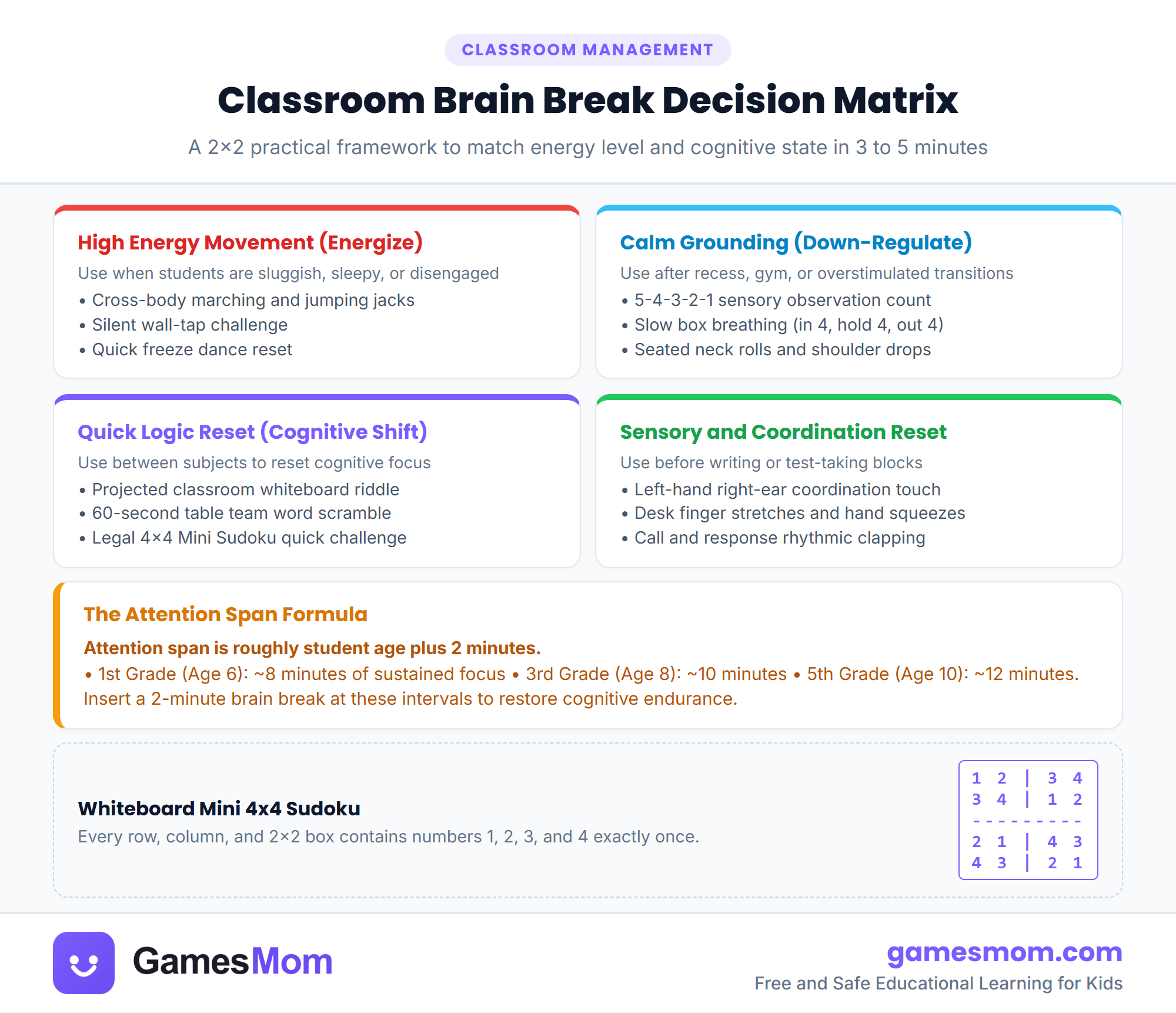
- A child focused attention window roughly equals their chronological age plus two minutes.
- Brain breaks must match the specific energy state of the room (rowdy, sluggish, restless, or transitioning).
- Quick physical or cognitive resets oxygenate the prefrontal cortex and restore dopamine levels.
- Keeping breaks under five minutes prevents losing instructional momentum.
- Jensen Teaching with the Brain in Mind and Physical Movement Resets
Why attention fades and how brief resets restore it
Every educator recognizes the signs of cognitive depletion: wandering eyes, fidgeting pencils, and drooping shoulders. Pediatric attention spans are biological realities, not behavioral flaws. As a general developmental benchmark, a child can sustain rigorous academic focus for approximately their chronological age plus two minutes. Beyond that window, neural receptors tire and learning returns drop sharply.
A brain break is a deliberate three to five minute pause that resets the nervous system. Brief shifts in physical movement or mental puzzles stimulate oxygen flow to the brain and balance dopamine and cortisol levels. Browse our teacher approved ideas in the five minute classroom games guide.
The key to successful resets is intentionality. A poorly timed break can derail a class, whereas a targeted reset channels student energy into focused readiness for the next lesson.
Matching the brain break to the energy state of the room
Effective teachers assess room energy before picking a reset activity. When a classroom is over-stimulated and rowdy, high energy activities only increase chaos. Instead, use calming resets like four-count box breathing, quiet visual focus games, or gentle color sequence matching to restore calm.
Conversely, the post-lunch slump requires an activation spark. When students appear sluggish and sleepy, energize the room with a sixty-second mental math sprint or an engaging whole-class trivia quiz. Try our free whiteboard tool spin the wheel online to randomize team participation and generate friendly excitement.
For fidgety afternoons, rhythmic gross-motor activities work wonders. Clapping games, tongue twister challenges, and freeze dance routines channel restlessness into coordinated teamwork.
Managing smooth lesson transitions
Switching from an intensive math block to silent reading requires a cognitive gear change. Transition brain breaks provide a mental buffer that helps students file away one topic before starting another. Mini logic puzzles like a four-by-four Sudoku grid or a daily classroom riddle serve as wonderful palate cleansers.
Using clear visual timers ensures that activities do not spill over into scheduled academic time. When students know a break lasts exactly three minutes, they participate enthusiastically and return to their seats promptly. Check our zero-prep digital tools in the indoor recess games collection.
Consistent, positive routines build a supportive classroom culture where students learn to self-regulate their focus and take ownership of their learning energy.
Frequently asked questions
How long should a classroom brain break last?
Brain breaks should last between three and five minutes. This provides enough time to reset cognitive focus and oxygenate the brain without breaking instructional momentum or class routine.
What is the best brain break for a rowdy classroom?
When students are overly excited, avoid high movement games. Choose calming sensory activities such as four-count box breathing, silent reaction challenges, or color sequence memory games.
Can homeschool parents use this brain break matrix?
Yes. Homeschool families can use the matrix between heavy subjects like math and writing to help children transition smoothly and avoid kitchen table burnout.