
Start with one of these
The practice that comes up most often, whatever grade you are working at.
Quick Math
Answer twenty math facts as fast as you can.
Play now
Times Tables
Practice any times table with 10 quick questions.
Play now
Sight Words
The Dolch lists, one deck at a time, marked as you go.
Practice
Letter Tracing
Say it, see it, then trace it, A to Z and beyond.
Play now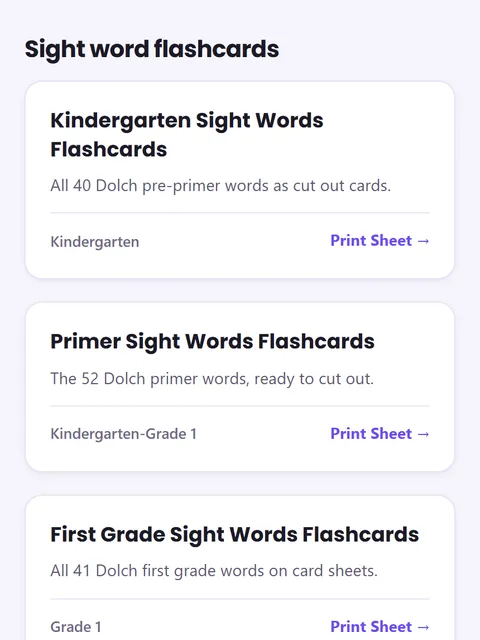
Printables
Worksheets with fresh problems every print.
Play now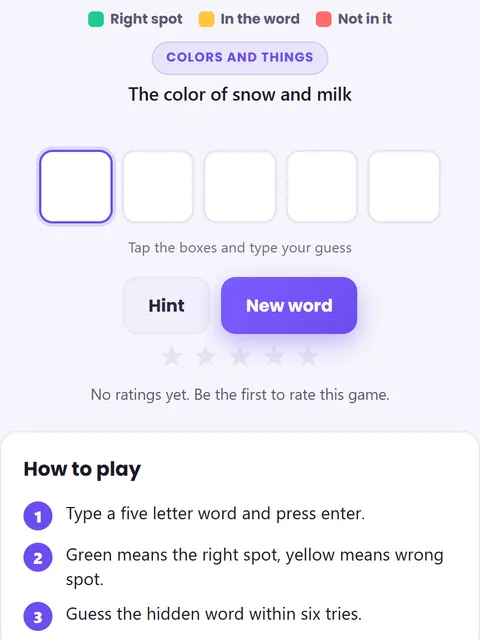
Word Guess
Guess the hidden 5 letter word in 6 tries.
Play now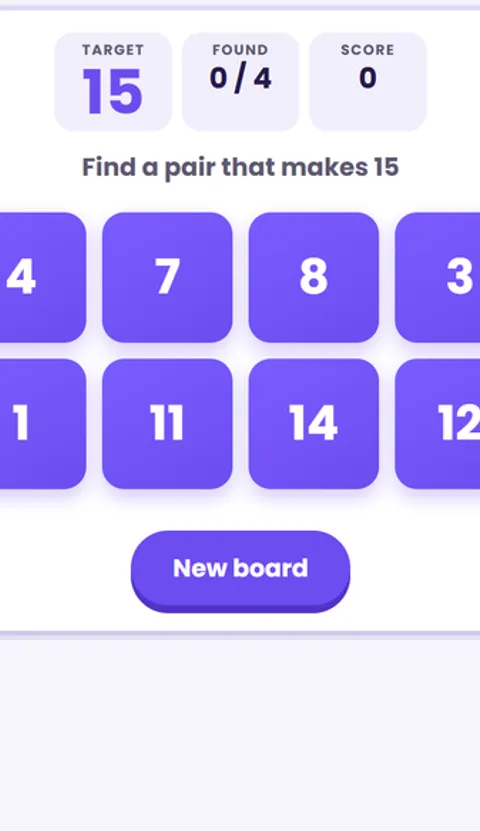
Number Bonds
Tap the pairs of numbers that make 10 or 20.
Play now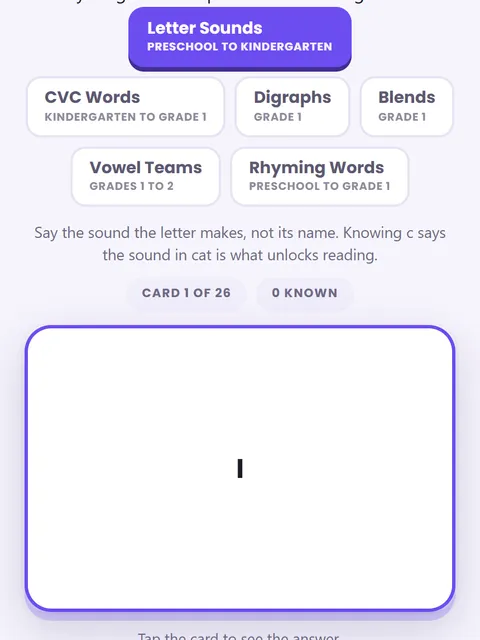
Phonics
Letter sounds, CVC words and digraphs, one card at a time.
PracticeBy grade
Each grade page collects what suits that age, with a note on what the year usually covers. Grades are a rough guide rather than a rule, and moving a child up or down a page is normal and often the right call.
By subject
When you want to drill one thing across several years rather than everything at one age, these run the full range.
What this is for
This is a free practice library for the part of a homeschool day that takes the most time and needs the least teaching: the drilling, the repetition and the daily ten minutes that turns something learned into something automatic. That is exactly what a good game is best at, and it is the part you can hand over with confidence.
You teach your child what addition means. What follows is hundreds of repetitions, and those can happen here while you are sitting with another child or getting lunch on the table. Everything marks itself, so you see the progress without running the practice.
It works alongside whatever curriculum you already use, so nothing here asks you to change how you teach. Free, no account, nothing to install, and built for children rather than for holding their attention as long as possible.
If you are still deciding how to approach the year, our research review on the state of modern homeschooling covers curriculum options, the legal picture state by state, costs and what the test score evidence does and does not prove.
By the shape of the day
Something together to start
Most homeschool days work better with a shared, low-stakes start before anyone is asked to do anything hard alone. A few quiz questions read out loud, or a riddle, gets everyone in the room and talking without it feeling like the lesson has begun.
Math practice, after the teaching
Games come into their own once the method is understood, turning the repetition that follows into something a child will happily do. Teach it your way, then hand over ten minutes of practice that marks itself and needs nobody sitting alongside.
Reading, letters and spelling
Phonics and sight words need short, frequent repetition rather than long sessions. Five minutes daily beats half an hour on Sunday, which is exactly the sort of thing that is easier to keep up when it does not need printing or preparing.
A brain break that ends on time
The hardest part of a break is stopping it. A game with a natural finish works better than open-ended play, because the round ends by itself and nobody has to be the one who calls time.
Off the screen
Plenty of a homeschool day should not involve a screen at all. Everything here prints on ordinary paper, generates fresh problems each time, and works for a child sitting at a table on their own.
New to homeschooling?
This page is the practice, not the plan. If you are still working out how to start, which method suits your family or what to teach at each age, the homeschooling guides walk through all of it, from the first decision to building a daily schedule, socialization and the honest pros and cons.
Getting the balance right
Two habits keep screen time where you want it, and both are easy to hold. Let a timer call time on a block so nobody has to argue about it, and keep one part of the day on paper. There are printables here for exactly that, and a timer for the rest.
Practice games are strongest at recall and fluency: number bonds, times tables, sight words and spellings. Pair them with the parts that are yours, like writing together, reading aloud and talking an idea through, and each does the job it is best at. That combination is what makes the drilling worth the time it takes.