
How to Play Ludo, with Simple Rules and Tips to Win
Ludo is the board game that families come back to again and again, and it is one of the easiest for a child to learn. You roll a die, race four tokens around the board, and try to get them all home before anyone else. There is luck in the dice and real choice in which token to move, which is why a five year old and a grownup can enjoy the same game at the same table. This guide covers the rules from the first roll to the last token home, and you can try each one in a free Ludo game as you read.
What is Ludo?
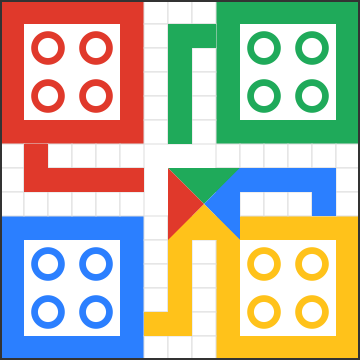
Ludo is a race game for two to four players, played on a square board with a colored yard in each corner and a cross shaped track running to a home column in the middle. Each player has four tokens of one color. It grew out of an old Indian game called Pachisi, and versions of it are played all over the world under different names. The heart of it is always the same: roll, move, and be first to bring every token home.
The goal of the game
You win by moving all four of your tokens the long way around the board and up into your own home column in the center. Getting a token home is not a simple dash, because rivals can knock you back and the dice do not always give you what you need, so the winner is usually the player who makes the smartest choices with the rolls they get.
Setting up the board
Each player picks a color and places their four tokens in the matching yard in the corner. The tokens start off the track, waiting in the yard until they are allowed out. Players take turns rolling a single die, and the youngest usually goes first, though any fair way of choosing works. Nothing else needs setting up, which is part of why Ludo is such a good travel and rainy day game.
How to play, move by move
To bring a token out of your yard and onto the track, you have to roll a six. Until you roll one, your tokens stay put, so the early game is often a wait for that first six. Once a token is out, you move it forward around the track by the number you roll each turn, following your color’s path toward the center.
Landing matters as much as moving. If your token lands exactly on a square where a single rival token is sitting, you send that rival all the way back to its yard, which is the best feeling in the game and a big swing in your favor. That token then needs another six to come back out and start its journey again. The colored star squares are safe houses, though, where tokens cannot be knocked back, so a rival resting on a star is out of reach.
Rolling a six gives you another turn, and in most versions capturing a token or getting one home earns an extra roll too, so a lucky turn can keep going. To finish, a token must travel all the way around and then up its home column, and it needs the exact number to land on the final home square. Overshoot and you have to wait for a better roll.
The rules people get wrong
The rule that trips up new players is needing a six to leave the yard. Children often forget and try to move a token out on any roll, so it helps to say it out loud at the start. The second is the exact count to get home. You cannot move a token into its home square with a roll that is too big, so near the end you have to plan your rolls rather than race blindly. And remember that safe squares protect a token only while it sits there, not while it is moving past danger.
Simple tips to win at Ludo
Try to get more than one token out of the yard early, so you always have a choice of which to move rather than being forced into a bad play with your only piece. Keep an eye on the safe star squares and use them to rest a token when a rival is close behind. Chasing a capture feels great, but do not leave your own token sitting one roll in front of an opponent right afterward, or you will simply be knocked back in return. Ludo works beautifully as one of the two player games as well as a full four player race, so it fits whatever size group you have.
Fun variations to try
Ludo has many house rules and cousins worth trying. Some families play that you must capture a token if you can, which makes the game sharper and more aggressive. Others agree that you need a token home before you can knock a rival back, which protects the early game. Parcheesi and Sorry are close relatives with their own twists, and the older Pachisi is played on a cloth board with cowrie shells instead of a die. Each keeps the same roll and race feel while changing the strategy just enough to stay fresh.
Is Ludo good for kids?
Ludo quietly teaches counting, turn taking and a little planning under a lot of luck. A young child counts the squares on every move, which is real number practice, while older players start weighing which token to advance and when to play it safe. Because the dice keep things fair, nobody is ever out of the game, and a child can genuinely beat an adult, which makes it a warm choice for the whole family. Our other free board games for kids share that same easy, everyone can play spirit.
Once the rules are clear, the rest is practice and a few friendly rounds. Gather two to four players or take on the computer, roll the die, and race your tokens home.